








With the rapid development of minimally invasive medicine, laparoscopic surgery has become an indispensable medical method in contemporary medicine. What follows is the trouble of surgical smoke caused by the application of electrosurgical equipment, which not only affects the surgical field of vision, but also affects the doctors and nurses. People bring serious and intangible health hazards.
Surgical smoke, also called aerosol, diathermy plume, is composed of 95% water or steam and 5% of cell debris in the form of particles.
A large number of studies have shown that 5% of cell debris in surgical smoke contains active viruses, inactive particles, and blood-borne pathogens: There are virus genes, viruses and active cells in the smoke produced by laser cutting tissue, which is potentially infectious; Since the steam produced by the ultrasonic knife is vaporized at low temperature, the steam may carry more infectious or active substances; In addition, electrosurgical tools such as high-speed planers and bone saws can vaporize HIV-containing blood and produce surgical smoke containing active HIV.
There are other harmful substances, such as: CO, acrolein, toluene, ethylbenzene, xylene, etc. and even cause cancer.
A good suction system is an important method of sucking out surgical smoke. The negative pressure suction device must be moved synchronously with the surgical electrical equipment to suck out the smoke in time, and the suction should be within the most effective range of 2.54cm-5.08cm from the smoke source.
For operating rooms that lack conditions, turn your head to avoid it when operating smoke is generated, which is simple and convenient. Use a suction device to absorb the smoke as much as possible from 2.54cm-5.08cm away from the smoke source, which is economical and affordable.
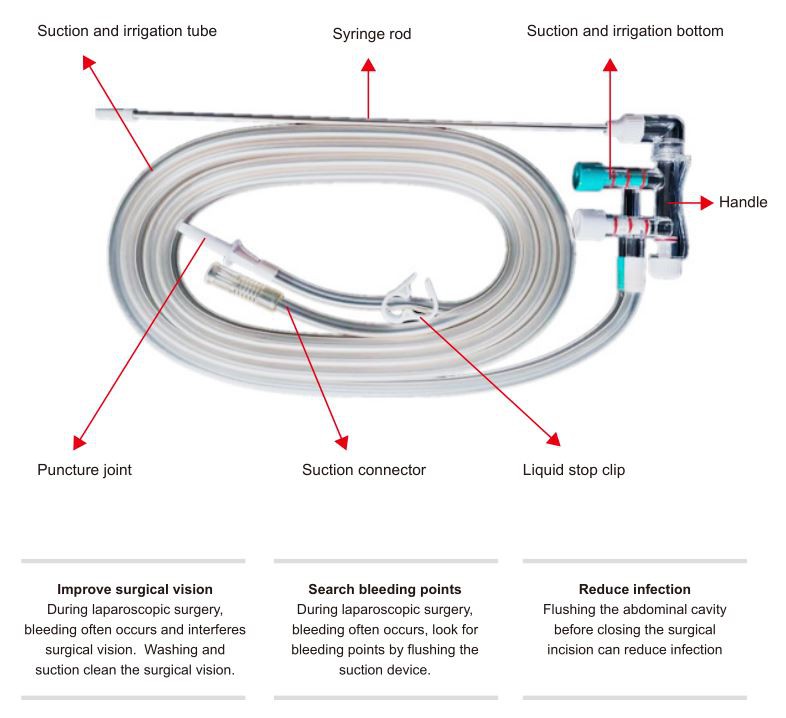
Disposable Suction And Irrigation
DISPOSABLE SMOKE FILTER
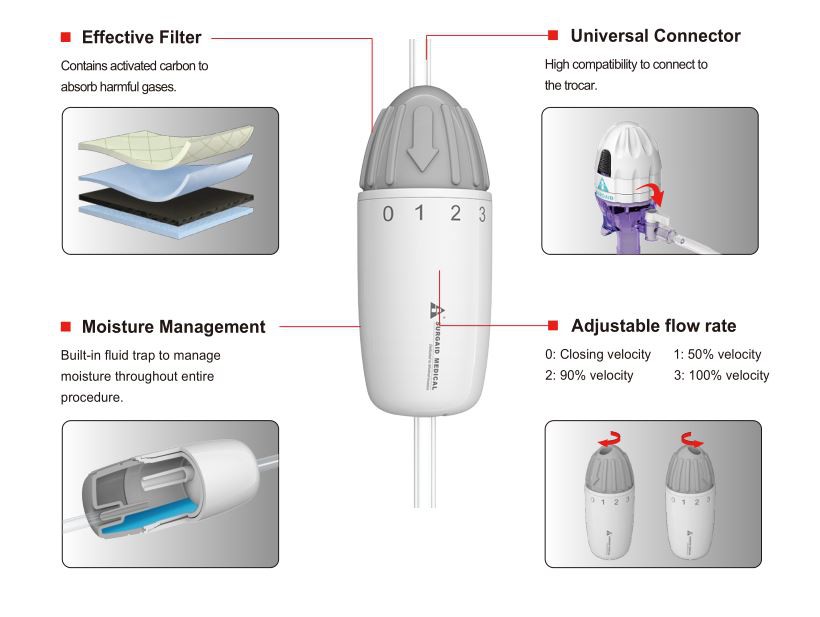
DISPOSABLE SMOKE FILTER USES