








In essence, innovative drugs sell patents, while devices sell complex precision manufacturing systems.
The research and development of innovative drugs is often divergent, innovation is sporadic and random, and the scale effect of leading pharmaceutical companies is not obvious,You never know where a very powerful innovation will suddenly pop up, which will completely change the original pharmaceutical pattern of a certain indication.
For example, drugs for the treatment of lung cancer with EGFR mutations. After the first and second generations of EGFR inhibitors, the third-generation EGFR inhibitors developed by AstraZeneca are expected to directly challenge the status of the first-generation EGFR first-line drugs and become the field The drug of choice.
The research and development of medical devices is often spiral, and the technology is improved and advanced. It is constantly upgrading and progressing on the existing basis, which is related to the development of the industrial foundation and industrial chain, and is also related to the company's hard power.
Medical equipment is a systematic project operated by a team, covering disciplines including hardware, software, algorithms, chips, biotechnology, clinical medicine and other interdisciplinary industries. The process of completing technical upgrades for products is long, leading advantages continue to be superimposed and accumulated, and products are marketed Widely recognized, it takes many years of accumulation.
The improved innovation model of medical devices, unless the underlying logic of the entire field changes, otherwise the industry will show steady growth and the strong will remain strong.
Ordinary investors are more likely to discover good companies with sustainable growth potential in accordance with the existing competitive landscape and product logic. It is not prone to black swan incidents, and it is easier for ordinary investors to firmly hold and enjoy the benefits of continuous growth of the company.
Medical devices are easy to make products, but the quality is uneven, and the imitation barriers are quite high. They belong to the "low difficulty research and development, high difficulty manufacturing" model. In the pharmaceutical industry, relatively few disciplines are involved, so it is a "highly difficult R&D, low-difficulty manufacturing" model with relatively low imitation barriers, especially for small-molecule chemicals.
The difference in innovation models between medicines and equipment shows that the iterative speed of innovative medicines and the risk of heavy pipeline uncertainty are difficult for ordinary investors to avoid. Large pharmaceutical companies with economies of scale cannot guarantee a sustained competitive advantage in a certain pharmaceutical field, and can only improve the failure rate of investment to a certain extent.
The speed and progress of obtaining certification for medical device products are not the most critical factors, but innovative drugs are critical. The time for obtaining the certificate of the same product determines the peak sales in the future, and often the space for the first approval is greater than the space for the later approval.
The patent cliff of pharmaceuticals is a fatal blow to companies. Medical device products are complex products that are superimposed on multiple technology patents, and there is no obvious patent cliff. At the same time, due to the high imitation barriers, after the patent expires, it is still difficult for imitators to make products with the same performance and stability, and the first-mover advantage of leading companies can continue to be maintained.
In terms of R&D investment and success probability, innovative medical devices are also more restrained and orderly than innovative drugs. The product iteration of medical devices is based on the partial innovation and upgrade of past products, and the probability of successful research and development is higher. Innovative drugs are different. You don't know where the next blockbuster product is before it appears, and it may have nothing to do with existing products.
Therefore, unless a big mistake is made, the leading position of the leading medical device will only become more stable with the passage of time and the accumulation of advantages. The global Top 10 medical device companies ranked according to income are relatively stable.
The leader of innovative drugs always has to worry about the patent expiration of existing blockbuster products and the failure of products under research at any time. The ranking of the top 10 global pharmaceutical companies is relatively not so stable.
About Surgaid Medical:
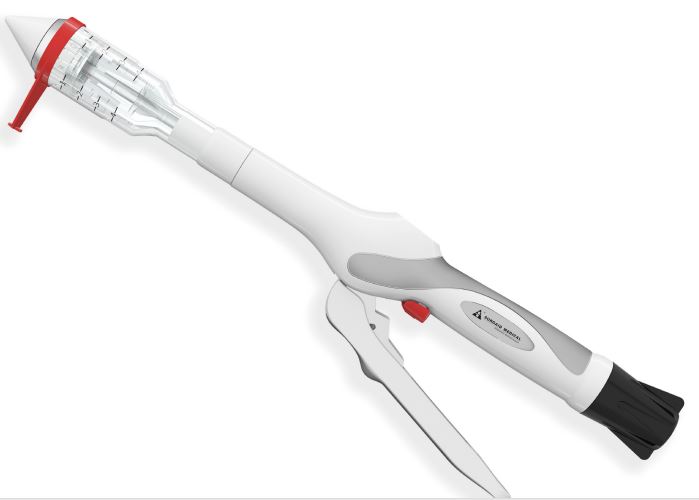
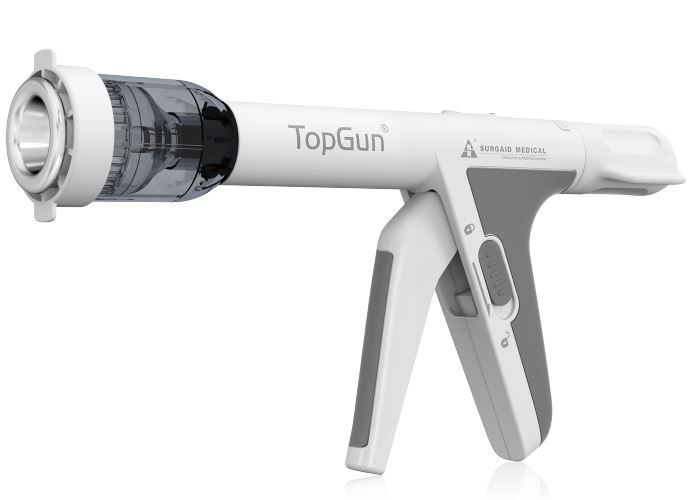
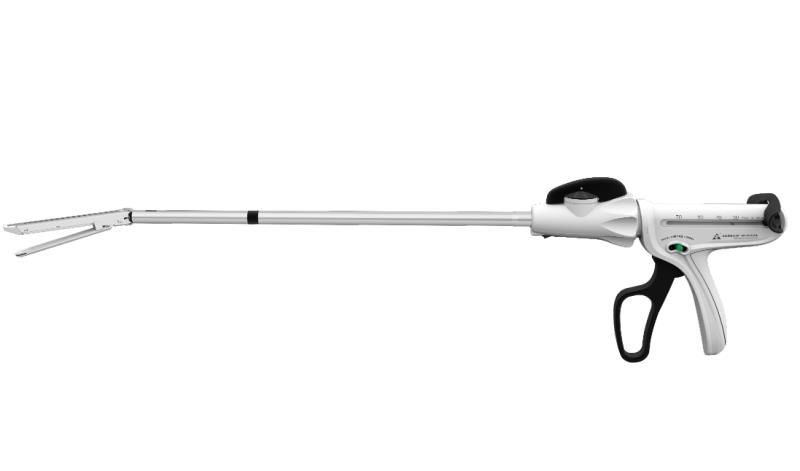
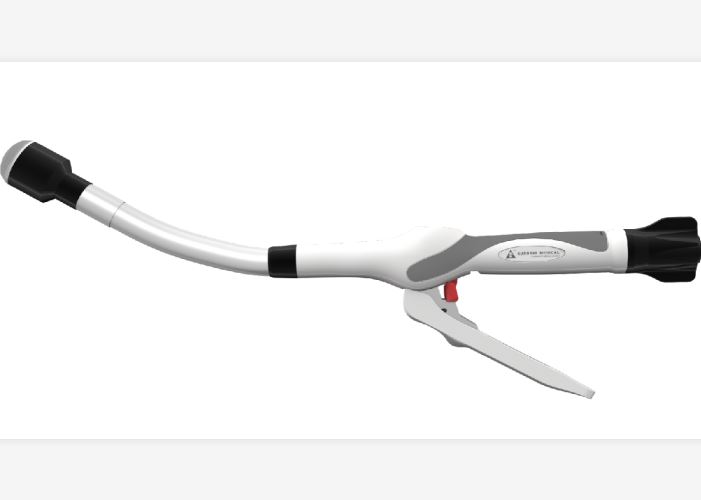
Surgaid Medical (Xiamen) Co., Ltd has been committed to surgical product development ,production and marketing for 10 more years . In particular, minimally invasive surgical products. Minimally invasive surgery is a surgical direction of development. Such as Disposable Laparoscopic Trocar, Linear Cutter Stapler, Circular Stapler, PPH, and so on.
Manufacturing our own Surgical products allows us to have complete control over the design and evolution of our products. We are able to adapt quickly to the constantly evolving healthcare market and offer high quality, single-use, cost-effective solutions that directly compete with global market-leaders.
Surgaid medical has established a research and development center that focuses on product design and manufacturing. The core technical and management team members of the center have more than decades of industry experience and rich theoretical and practical experience. A professional team with rich experience in the field of minimally invasive surgery has been gathered and trained internally. At present, there are 78 professional teams in basic research, design and application, process manufacturing, testing and other aspects.
Surgaid products:
For more product information at https://www.surgaid-medical.com/