








Trocar placement principles
Trocar placement is the first approach problem faced by laparoscopic surgery, which is completely different from the incision choice of open surgery. The incision for open surgery should follow the shortest distance principle, and the incision closest to the operation site should be selected. In laparoscopic surgery, due to the need for a sufficient distance to focus, and the size of the surgical instrument is long, it is necessary to keep a certain distance from the surgical site, and arrange a 0.2~1.5 cm poking port around the surgical site, although it is also as parallel to the skin lines as possible, but There is no requirement on the size of the poking hole, and there is no need to follow the shortest distance principle.
concentric circles rule
In clinical practice, the basic principle of trocar placement is summarized as the "rule of concentric circles", that is, take the lesion or the surgical operation site as the center and select a certain distance (various surgical procedures are different, usually >10 cm) as the radius to make 1 Or multiple arcs, intercept a few points on the arc as the trocar placement point, and the observation window is mostly the midpoint of the arc. Related documents also propose the principle of triangle distribution, that is, the lens and the left and right hands are equilateral triangles. It is similar to the principle of "concentric circles".
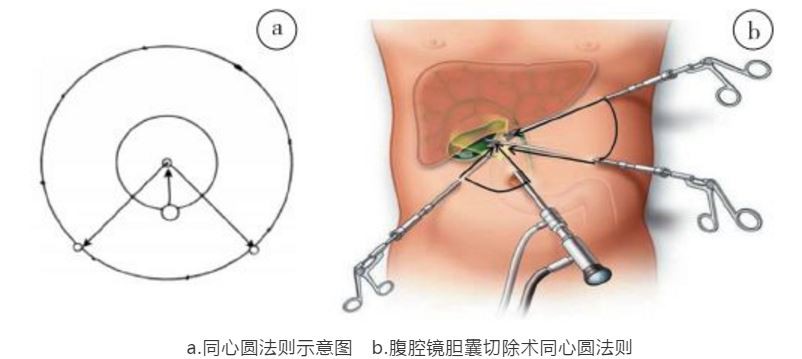
If picking points on different arcs, avoid picking 2 points on the same radius or similar radius, otherwise "coaxial interference" will occur, that is, when the instrument blocks the lens (coaxial with the observation window) or when operating with both hands forward and backward There must be a certain "horizontal spacing" between the interfering trocars to avoid the "chopstick effect", and generally a "shortest spacing" of ≥5 cm is required.
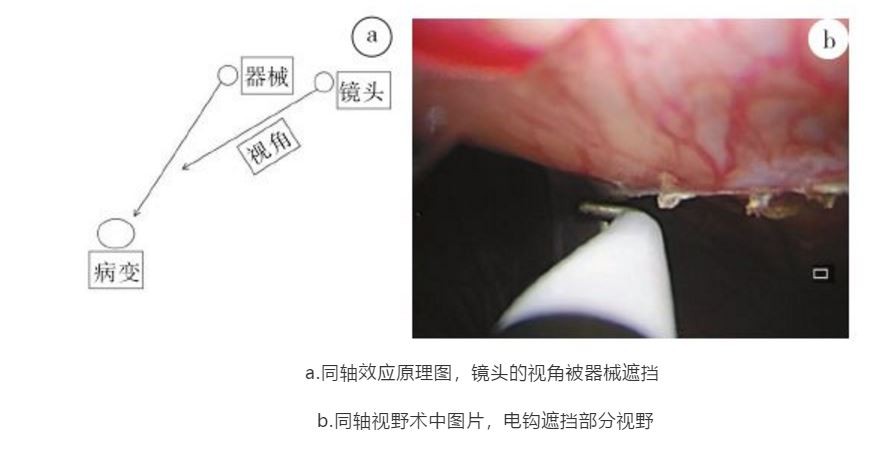
slope effect
Hillside effect refers to the bulging of tissue between the operation site and the lens, which affects the exposure of the dorsal side. For example, the bulging pancreas during radical gastric cancer surgery will affect the exposure of No.7, 8, and 9 lymph nodes. In order to avoid the "hillside effect", a position closer to the top of the lesion should be selected as the observation window. For example, it is easier to observe the lymph nodes on the upper edge of the pancreas than the poke hole on the umbilicus during gastric surgery. But at the same time, it is necessary to avoid placing the observation window "directly above" the lesion. The viewing angle directly above is similar to satellite map images, lacking side details and three-dimensionality. Therefore, different angles of laparoscopes should be combined (the current laparoscope product angle is 10~45 ̊ to choose the corresponding observation angle, for the most commonly used 30 ̊ mirror, it is recommended to choose the observation angle of 30~45 ̊.
Surgaid Medical (Xiamen) Co., Ltd
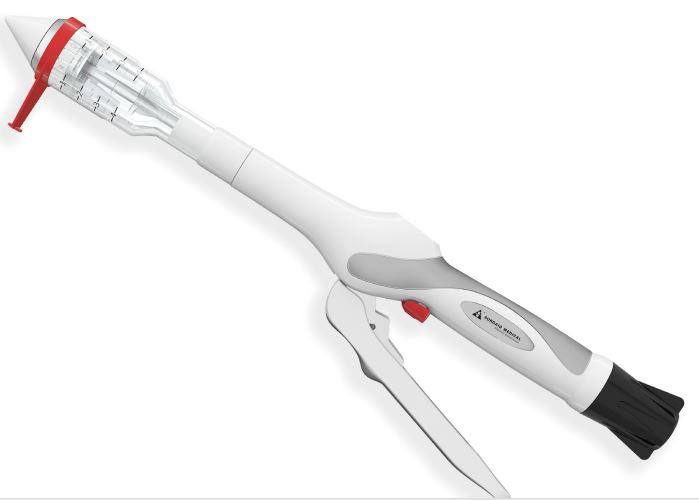
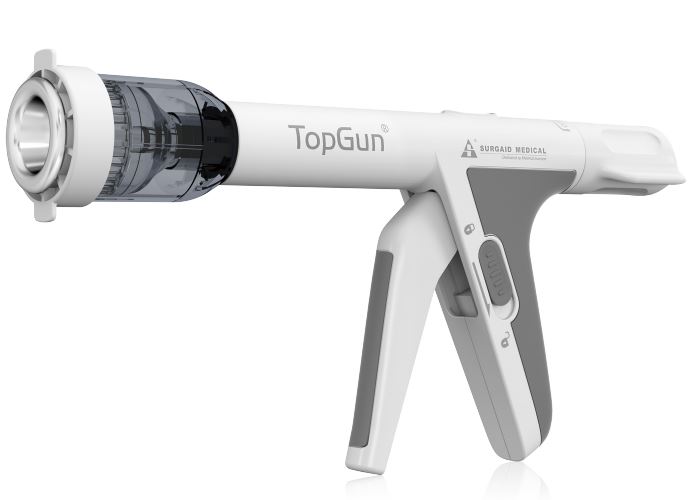
Surgaid Medical (Xiamen) Co., Ltd has been committed to surgical product development ,production and marketing for 10 more years . In particular, minimally invasive surgical products. Minimally invasive surgery is a surgical direction of development. Such as Disposable Laparoscopic Trocar, Linear Cutter Stapler, Circular Stapler, PPH, and so on.
Manufacturing our own Surgical products allows us to have complete control over the design and evolution of our products. We are able to adapt quickly to the constantly evolving healthcare market and offer high quality, single-use, cost-effective solutions that directly compete with global market-leaders.
Surgaid products:
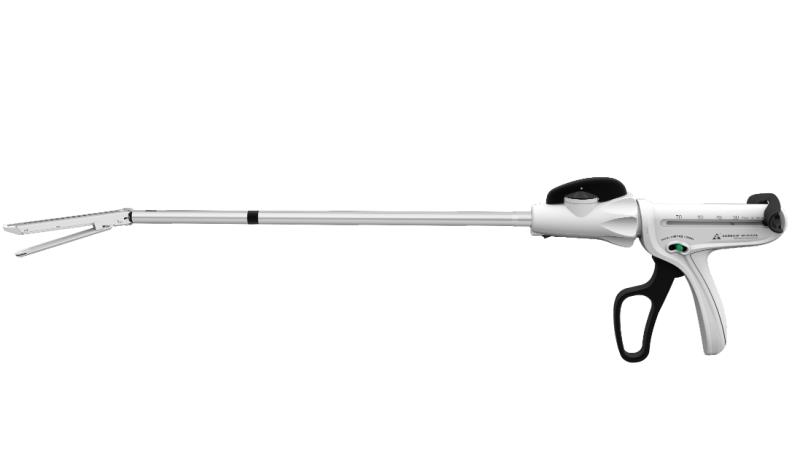
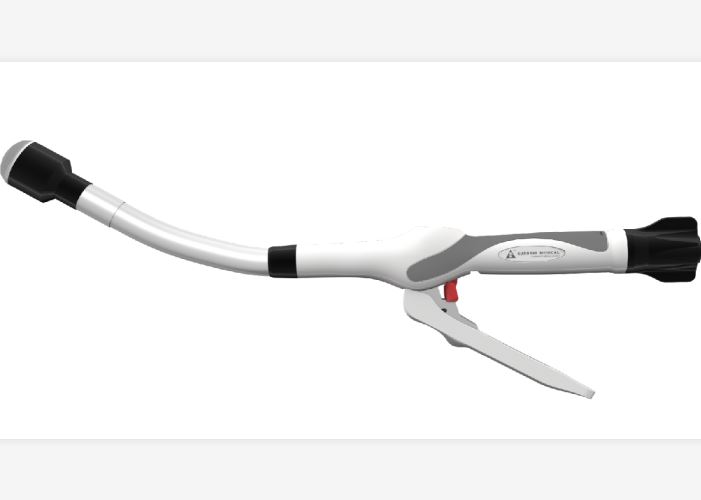
For more product information at https://www.surgaid-medical.com/