








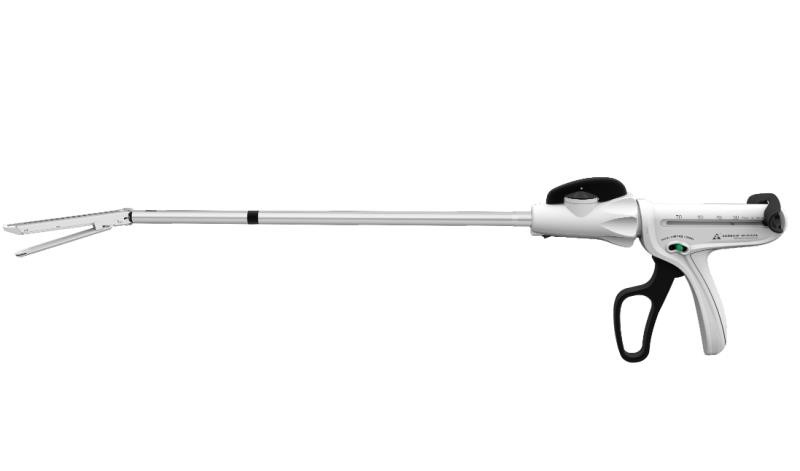
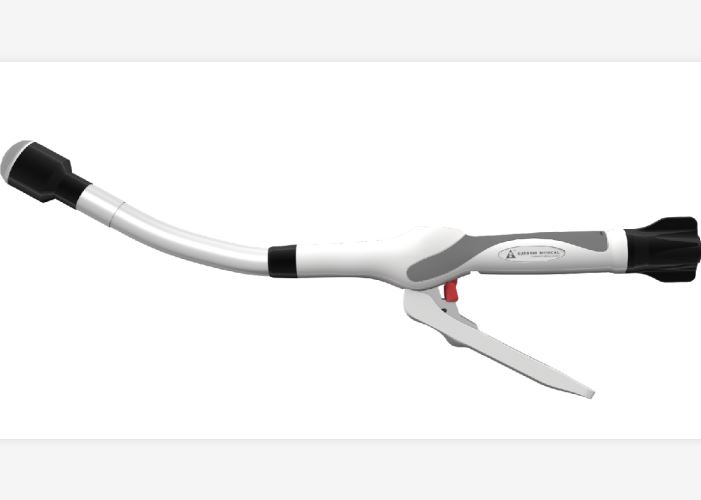
1、Linear Stapler
principle:Place the tissue between the staple cartridge and the staple anvil, place the positioning needle, predetermine the appropriate thickness according to the tissue thickness scale, pull the firing handle, and the staple driver will insert two rows of staggered staples into the tissue and bend it into a "B" Before loosening the suture device, you must cut off the excess tissue and the organs that are expected to be removed along the edge of the suture device's mouth. After disinfecting the stump with iodine, loosen and remove the suture device.
Product Features: Although this kind of suturing device has only one function, it is widely used, and is mainly used to seal the stumps of the bronchus, esophagus, stomach, duodenum, intestine, and blood vessels.
Precautions:
1. Different models can be selected according to different tissues, but it should be noted that this type of stapler does not have a cutting function.
2. Make sure that the positioning pin has entered the positioning hole correctly before each firing. Incorrect positioning of the positioning needle may result in incomplete formation of the staples and affect the closing effect.
3. Please do not open the insurance before confirming the firing.
4. When firing, please hold the firing handle firmly. Incomplete firing may lead to incomplete staple formation and affect the closing effect.
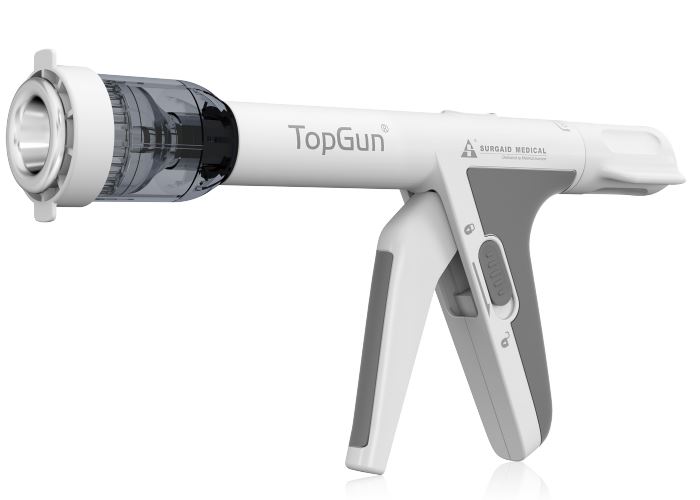
2、Circular Stapler
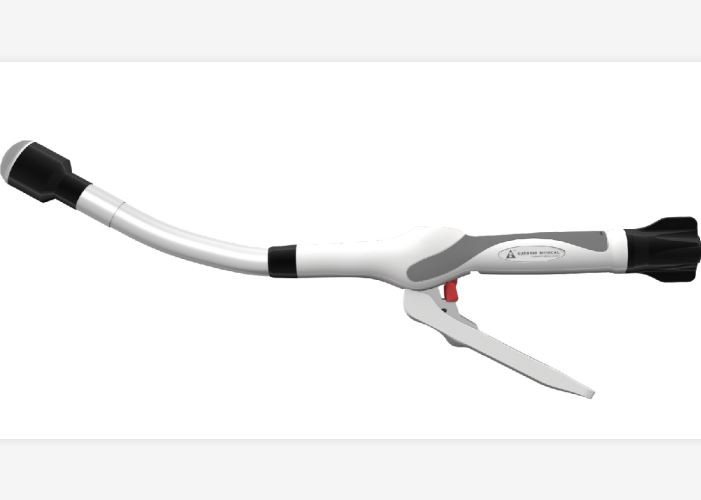
(1)Single Use Intraluminal Stapler
principle:Anastomosis is carried out with two rows of alternately arranged sutures. The sutures pass through the two layers of tube wall tissue and bend into a "B" shape while being blocked by the nail seat. The cutting and anastomosis are completed in one time.
Precautions:
The broken end of the intestine to be anastomosed should be fully freed and stripped at least 2cm;
Withdraw the stapler gently, and check whether the cut tissue is a complete ring;
The stitch length of purse-string suture should not exceed 0.5cm, and the margin should be 2~3mm. Too much tissue is easy to embed in the anastomosis and hinder the anastomosis. Be careful not to miss the mucosa.
(2)disposable circular stapler
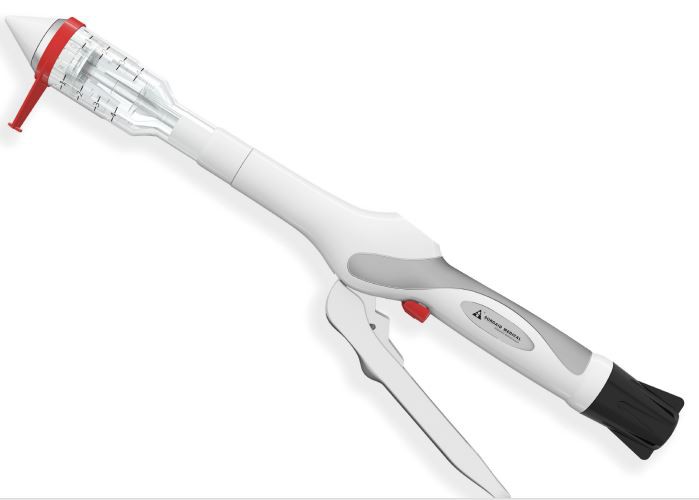
This type can be divided into: stapler PPH and TST.
Principle of PPH operation: Use a special round stapler to insert into the rectum through the anus, circularly excise the mucosa and submucosa tissues of the intestinal wall at the lower end of the rectum, and perform an anastomosis at the same time as the excision, so that the prolapsed anal cushion is lifted up and restored to its normal anatomical position. Suspension function, at the same time, cut off the arterial blood branch supplying hemorrhoids, play the role of "cut-off", so as to achieve the purpose of radical cure.
TST surgery follows the formation mechanism of human hemorrhoids. The specific difference between the two is that TST is a selective stapler, which is a new technology developed on the basis of PPH surgery. TST uses a special anorectoscope to form different open-loop windows, uses an anastomosis probe to lock the hemorrhoids, adjusts the resection range of the hemorrhoidal mucosa according to the size and number of the hemorrhoids, and maximizes the protection of the normal function of the anus.
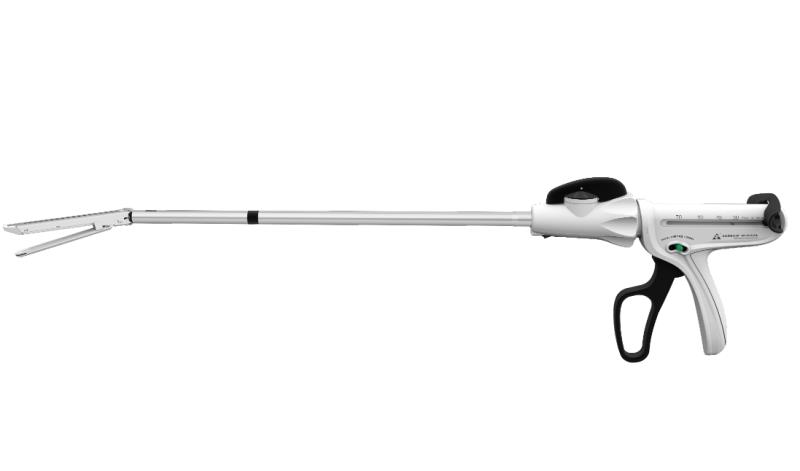
3、(Linear Cutter)
principle:This kind of stapler can simultaneously drive two rows of cross-arranged staples on both sides of the tissue, and then use a push knife to cut and break between the sutured tissues on both sides. At present, this kind of stapler is widely used clinically for stomach and jejunum side-to-side anastomosis, intestinal-intestinal side-to-side anastomosis, tubular stomach production, incomplete lung splitting, partial lung resection and other operations.
Precautions: Do not open the instrument immediately after firing, keep the instrument closed for 15-20 seconds to enhance the hemostatic effect. The firing process is done in one go, one push to the end, without stopping during the firing; Place the tissue to be fired within the tick mark (pay particular attention to the end of the tissue) to avoid invalid operations; The correct use of the semi-locking device requires the tissue to be fired to be smooth and free of wrinkles and folds.
The above introductions are some of the "artifacts" commonly used in the field of gastrointestinal surgery. With the advancement of technology, I believe that more equipment will come into our eyes and open new doors for surgery!
Surgaid Medical (Xiamen) Co., Ltd
Surgaid Medical (Xiamen) Co., Ltd has been committed to surgical product development ,production and marketing for 10 more years . In particular, minimally invasive surgical products. Minimally invasive surgery is a surgical direction of development. Such as Disposable Laparoscopic Trocar, Linear Cutter Stapler, Circular Stapler, PPH, and so on.
Manufacturing our own Surgical products allows us to have complete control over the design and evolution of our products. We are able to adapt quickly to the constantly evolving healthcare market and offer high quality, single-use, cost-effective solutions that directly compete with global market-leaders.
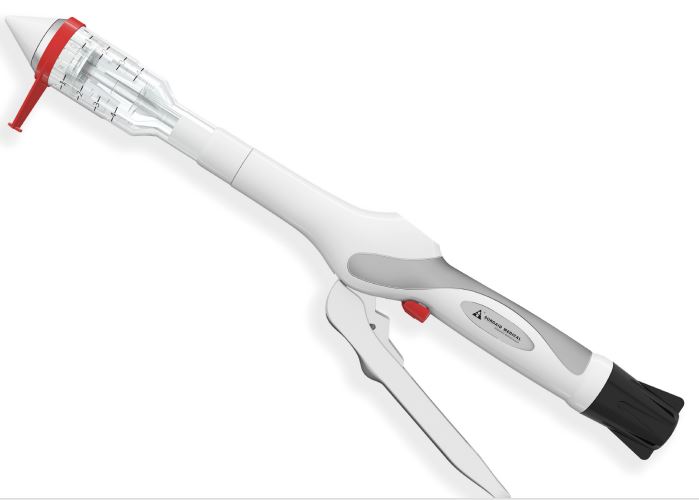
Surgaid products:
For more product information at https://www.surgaid-medical.com/