








1 Open surgical treatment
Due to the lack of large-scale gastric cancer screening in my country, and the clinical cases are mainly advanced gastric cancer, for patients with advanced gastric cancer whose cancer tissue has infiltrated into the submucosa (muscular layer, serous layer, etc.), it is recommended to have sufficient margins Lesion resection and D2 lymph node dissection are standard radical gastric cancer surgery. Liu Honggen et al. hierarchically analyzed the prognostic factors of 544 cases of gastric cancer. The results showed that the 5-year survival rate of the group with more than 15 resection-negative lymph nodes was significantly higher than that of the group with less than 15 resection-negative lymph nodes, and the difference was statistically significant (P <0.05), the prognosis of patients is positively correlated with the number of lymph node dissection, and the number of negative lymph nodes can also be used as one of the indicators to predict the prognosis of patients. At the same time, ensuring the detection rate of a sufficient number of lymph nodes is also very important to obtain more accurate lymph node staging, which can make the staging more accurate and better assess the prognosis.
The 8th edition of the American Cancer Union Cancer Staging Manual recommends that at least 16 lymph nodes be dissected and pathologically evaluated to ensure the accuracy of the N staging. The seizure of more than 30 lymph nodes can get a more accurate evaluation. Regarding the scope of abdominal para-aortic lymph node dissection, Wang Liang et al. compared the data of 160 cases of gastric cancer who underwent D2 dissection plus abdominal active paralymph node dissection with the data of 160 cases of gastric cancer who underwent only D2 dissection at the same time, and the median survival time They were (36.4±10.8) months and (23.4±4.4) months, respectively, and the difference was not statistically significant (P>0.05). Therefore, for patients with T2, T3, and T4 gastric cancer, whether to add para-aortic lymph node dissection has been controversial.
Laparoscopic treatment
Patients with gastric cancer invading the serosal layer with an area less than 10 cm2 can achieve radical resection through laparoscopic D2 radical gastric cancer surgery. The large-sample multi-center retrospective cohort study conducted by Chinese scholars on laparoscopic-assisted gastrectomy showed that in addition to safety and technical feasibility, the short-term prognosis is also relatively good, with a 3-year survival rate and a 3-year disease-free survival rate of 75.3. % And 69.0%. With the improvement of the level of science and technology, various high and new technologies have emerged, and the application of 3D endoscopy in clinical surgery has gradually matured. Lu et al. evaluated the short-term prognosis of 228 patients with gastric cancer (115 in the 3D group and 113 in the 2D group). The main complication rates of the two groups were 1.8% and 2.7%, respectively. The postoperative intra-abdominal bleeding in the 3D laparoscopic group The rate was 0, while the 2D laparoscopic group was 3.6%. From the display of 2K resolution to 4K resolution, from wearing 3D glasses to ultra-high-definition naked-eye 3D, 3D endoscopy technology can better restore the three-dimensionality of the surgical field of view, use multiple magnification functions to display the tissue structure, and improve the brightness of the surgical field. Reduce visual fatigue and achieve accurate display of surgical scenes.
3 Robot-assisted surgical treatment
Robotic surgery has developed rapidly in recent years and has the advantages of good hand-eye coordination, stable operation, small surgical trauma, and quick postoperative recovery. The artificial intelligence tracking surgical instrument real-time tracking technology of the robot-assisted surgery system and the laparoscopic vision automatic navigation technology can also allow the surgeon to achieve rapid and precise positioning of the camera and surgical instrument without manually adjusting the camera angle of view and the position of the surgical instrument. Kim et al. compared 223 cases of robot-assisted surgery with 211 cases of laparoscopic surgery. The total complication rate of the robot group was 11.9%, and the total complication rate of the laparoscopic group was 10.3%. There was no death in the two groups.
Although there are many retrospective studies on robot-assisted gastrectomy, the research value of these studies is limited due to differences in inclusion criteria, surgical experience, type of reconstruction performed, and evaluation results. Therefore, the industry urgently needs The formulation and promulgation of international standards for robot-assisted surgery. Due to the long duration of robot-assisted surgery, patients with gastric cancer with extensive invasion, more complications, body mass index> 24 kg/m2, and chemotherapy should be carefully considered.
In addition, due to the limitations of the robotic surgery system itself, the surgical field of view is more limited than traditional open surgery. Therefore, for patients with severe laparoscopic organ adhesions, robotic surgery should not be the preferred surgical method. As a tool that combines high-tech and surgical operations, robot-assisted surgical treatment needs to be developed and perfected in clinical practice.
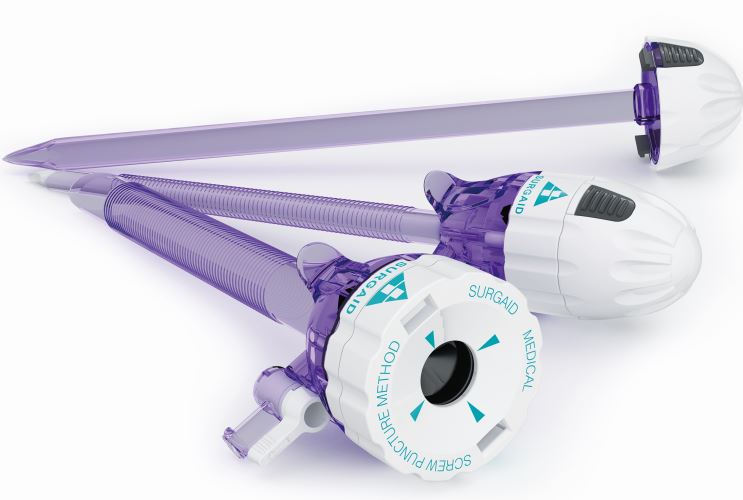
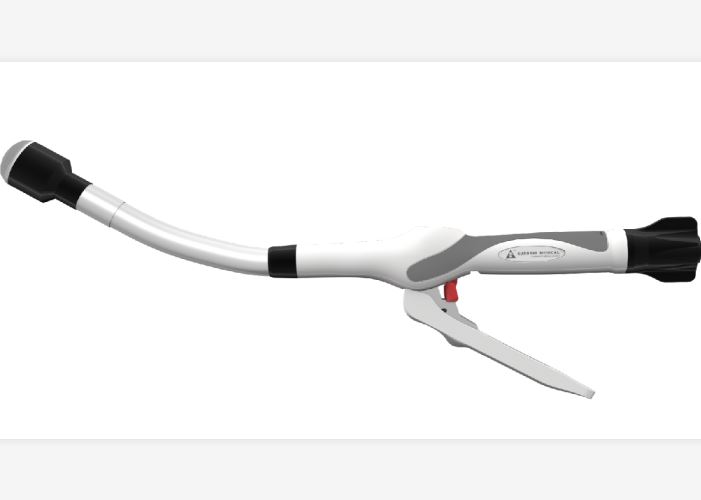
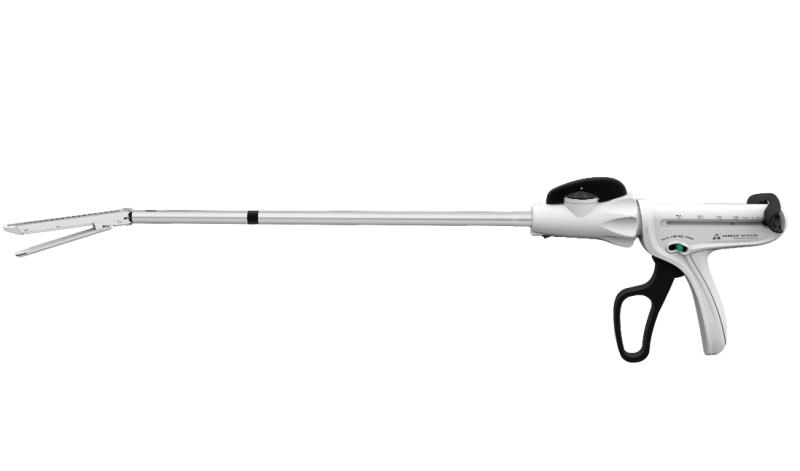
Surgaid Endoscopic Linear Cutter Stapler
Endoscopic Linear Cutter Stapler for operation. The principle of the stapler is like a stapler. Endo cutter stapler is very convenient, more and more popular with doctors.
Disposable Linear Stapler Feature:
Stepped staple cartridges are suitable for presses of various tissue thicknesses, effective clamping and firing.
The metal anvil under the continuous welding process is stronger, the staples are firmly anchored, and the surrounding tissue is protected.
New knife sharp cutting, minimizing tissue tearing is beneficial for wound healing.
6 rows of satple lines to improve the safety of anastomosis.
Extending suture length to 70.
Rotating catridge,more flexible in narrow surgery space.
Symmetrical ergonomic design to allow either hand to operate the device.
ABOUT SURGAID PRODUCTS:
For more product information at https://www.surgaid-medical.com/