








Treatment of early gastric cancer
1 Endoscopic treatment
Early gastric cancer refers to cancer tissue invasion is limited to the mucosa and submucosa. Endoscopic treatment of early gastric cancer includes Endoscopic mucosal resection (EMR) and Endoscopic submucosal dissection (ESD). Xi Xiaoxia’s research showed that after strict selection of indications, the 5-year survival rates of both open surgery and endoscopic surgery were more than 90%, and the difference between the two was not statistically significant (P>0.05).
At present, endoscopy is commonly used in patients who can confirm that there is no lymph node metastasis before surgery, especially for patients with differentiated adenocarcinoma with tumors invading the lamina propria or muscularis mucosa (stage T1a), the longest diameter of the tumor is less than 3 cm, and no ulcer.
Compared with EMR, ESD can peel off the diseased tissue more completely through multiple and multiple submucosal injections, expand the scope of treatment, and significantly reduce the recurrence rate of patients, but the bleeding rate and perforation rate are higher. Bleeding is the most common complication of ESD Intraoperative bleeding is one of the important factors affecting the widespread development of ESD. Intraoperative and postoperative bleeding are related to the patient's disease condition, the doctor's operating ability, and the instruments used.
2 Laparoscopic treatment
Traditional open surgery is susceptible to infection, relatively large bleeding, and slow postoperative recovery, resulting in a long hospital stay. With the maturity of laparoscopic technology, laparoscopic surgery has been widely used in the treatment of patients with early gastric cancer. n the process of laparoscopic surgery for gastric cancer patients, it is necessary to remove not only the tumor, but also the lymph nodes in the area to improve the survival rate after surgery. This requires clinicians to accurately understand the extent of lymph node metastasis and its accompanying effects before and during surgery. The anatomical relationship of the blood vessels around the stomach.
The 3D reconstruction of the artery can be performed by enhanced multi-slice spiral CT before surgery to understand the anatomical relationship of the perigastric blood vessels, so as to better evaluate the preoperatively, while ensuring the number of lymph nodes to be removed, avoiding the cause during laparoscopic surgery A case of bleeding from a ruptured vessel. At this stage, laparoscopic surgery still has shortcomings in many aspects. For example, compared with traditional open surgery, laparoscopic surgery is more difficult, the surgery learning curve is longer, the surgical indications are more stringent, the cost of equipment and surgery is higher, and the surgery There are laparoscopic-related complications during and after the operation.
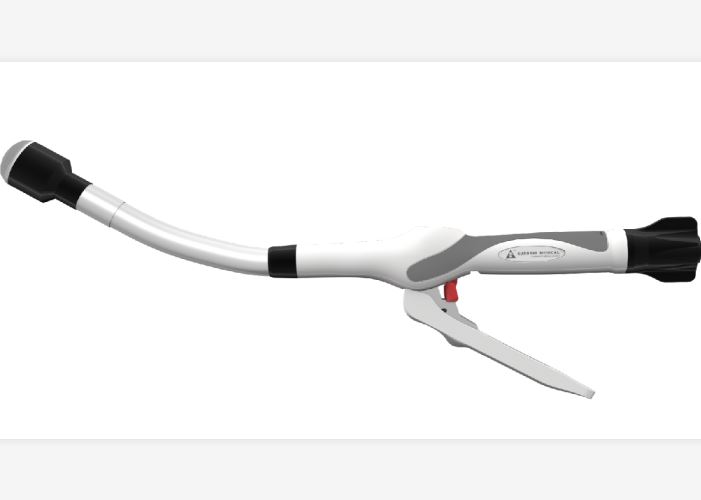
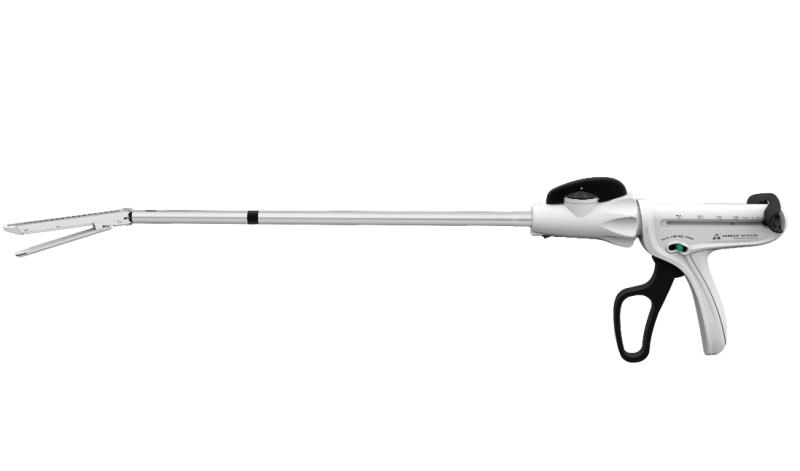
Surgaid Endoscopic Linear Cutter Stapler
Endoscopic Linear Cutter Stapler for operation. The principle of the stapler is like a stapler. Endo cutter stapler is very convenient, more and more popular with doctors.
Disposable Linear Stapler Feature:
Stepped staple cartridges are suitable for presses of various tissue thicknesses, effective clamping and firing.
The metal anvil under the continuous welding process is stronger, the staples are firmly anchored, and the surrounding tissue is protected.
New knife sharp cutting, minimizing tissue tearing is beneficial for wound healing.
6 rows of satple lines to improve the safety of anastomosis.
Extending suture length to 70.
Rotating catridge,more flexible in narrow surgery space.
Symmetrical ergonomic design to allow either hand to operate the device.
ABOUT SURGAID PRODUCTS:
For more product information at https://www.surgaid-medical.com/