








Gastric cancer is the third leading cause of cancer-related deaths worldwide, with approximately 1 million newly diagnosed cases each year. There are significant differences in the incidence of gastric cancer between regions around the world. The incidence in countries such as East Asia, Eastern Europe and Latin America is significantly higher than that in other regions. The incidence and mortality of gastric cancer in my country account for about 50% of the world, and many patients in my country are diagnosed at the advanced stage of gastric cancer with poor prognosis and limited treatment options. In recent years, my country has made many efforts to improve the early diagnosis rate and treatment effect of gastric cancer.
Diagnosis of gastric cancer
1 Serology
Based on my country's large population base and its status as a developing country, the general survey of high-risk groups of gastric cancer in my country is still at a low level. Endoscopy and serum tumor markers are commonly used clinically in my country to screen for gastric cancer. Commonly used serum markers include carcino-embryonic antigen (CEA), carbohydrate antigen (CA) 724, CA199, CA242 , Pepsinogen (PG), etc. However, the specificity and sensitivity of these serum markers are not high, and their combined detection can improve the diagnostic sensitivity.
The retrospective analysis of the serological detection of 36 patients with gastric cancer and 41 patients with benign gastric disease by Ye Miaoqin and Liao Benbing showed that the sensitivity of CEA, CA199, and CA724 for primary gastric cancer screening was 44.4%, 39.4%, and 44.4%. Liu Weidong et al. tested the serum PG level in more than 3000 patients with a high incidence of gastric cancer. The PG Ⅰ/Ⅱ value was 7.5 as the cut-off value. The sensitivity and specificity were 87.5% and 42.5%, respectively; but PG Ⅰ≤75 μg/L In the standard, its sensitivity and specificity are only 17.5% and 72.6%. The cut-off value of its clinical use needs further study.
2 Film degree exam
Gastroscopy, ultrasound gastroscopy, spiral CT scan, PET-CT scan, MRI, electronic staining technique fine examination, air-barium double contrast and other auxiliary examinations are the main methods of gastric cancer diagnosis. The confocal laser microscopy technology developed in recent years is also an effective method for diagnosing early gastric cancer. Optical inspection technology has the advantages of timely diagnosis without biopsy. Ma Panpan et al. performed probe-type confocal laser microendoscopy on 119 patients. Using pathological diagnosis as the standard, confocal optical microscope had a sensitivity of 95.83% for high-grade gastric intraepithelial neoplasia (including gastric cancer), which was specific. The scores were 97.17%, showing high diagnostic efficiency.
3 Artificial intelligence diagnosis
With the popularity and application of artificial intelligence, the efficiency of artificial intelligence-assisted diagnosis and treatment of gastric cancer has been greatly improved. Miyaki et al. developed a computer laser gastroscope quantitative diagnosis software. In the differential diagnosis of 100 cases of early gastric cancer and 40 cases of precancerous lesions, it can automatically distinguish cancer and non-cancerous areas under endoscopic imaging, and automatic quantitative analysis can be used to identify early Stomach cancer. Ba-Ssalamah et al. used computer artificial intelligence to classify the pathological types of different gastric lesions based on histological information. The discrimination rate between gastric adenocarcinoma and lymphoma was 96.9%, and the discrimination rate between gastric stromal tumor and lymphoma was 96.9%. 100%. Wang Zhijie and others diagnosed 5159 gastroscopic images through computer intelligent detection and manual detection. The results showed that the sensitivity of computer intelligent detection of early gastric cancer was 88.8%, the specificity was 89.7%, the accuracy rate was 89.4%, and the average diagnosis time was 0.3 s. , Are better than the manual test results of the control group.
Disposable Surgical Gastrointestinal Linear Cutter Stapler
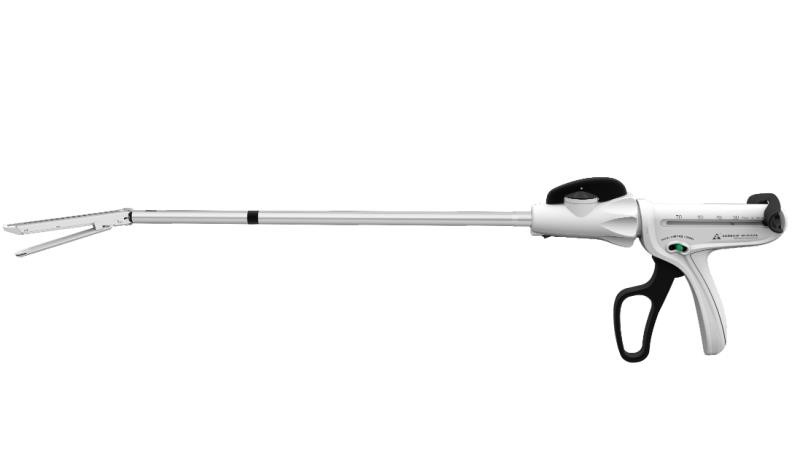
Disposable Laparoscopic Endoscopic Linear Cutter Stapler (Linear Stapler Cutter) is used in abdominal surgery, thoracic surgery, gynecology and pediatric surgery. Generally, the stapler is used for resection and transection of organs or tissues.
Surgaid Disposable Gastrointestinal linear cutter stapler Application
Gastric, intestinal, gynaecologic, thoracic, paediatric surgery for transection, resection and creation of anastomoses.
Disposable Gastrointestinal linear cutter stapler Feature:
Tissue-retaining pin: Maintains tissue control and leads to the better staple formation
Skid-proof design: Better control
Safety lockout: Prevents a used reloading unit from being refried
Unique anvil bucket: Improves staple formation.
About Surgaid products:
For more product information at https://www.surgaid-medical.com