








Whether a new surgical method can become the recommended standard surgical method requires four stages of preclinical demonstration and animal experiments, clinical research trials, clinical promotion and formal recommendation, and continuous collection of experimental and clinical outcome data at each stage to be objective, Scientifically evaluate the operation.
Among all the current surgical methods, the weight loss metabolic surgery methods recommended by most national professional societies after these four stages of evaluation include laparoscopic adjustable gastric banding, sleeve gastrectomy (SG), Roux-en- Y gastric bypass (RYGB), biliary-pancreatic shunt and duodenal transposition (BPD-DS), single-stoma duodenal transposition (SADI-S/SIPS) and intragastric balloon treatment techniques.
In addition, single anastomosis orogastric bypass (MGB/OAGB) has also been recognized by the International Federation of Obesity and Related Disease Surgery (IFSO). According to the actual situation in my country, the position of professional societies in Western countries and the existing clinical evidence, the author recommends: my country can recommend SG and RYGB as key recommendations, SADI-S/SIPS as general recommendations, and MGB/OAGB and BPD-DS as cautious recommendations. Surgical approach. There are no intragastric balloon products and endoscopic suture products in China, so the intragastric balloon treatment technology and gastroscopic surgical methods are not evaluated. Other surgical methods have been eliminated, or clinical evidence is still insufficient, and no evaluation will be performed.
Modern bariatric surgery originated in the 1950s. For more than half a century, surgical methods have evolved from laparotomy to laparoscopic and robot-assisted minimally invasive surgery, and the subject content has experienced expansion from simple weight loss surgery to metabolic weight loss surgery. At present, this subject has become one of the most important specialties in the field of surgery and is still developing rapidly. The author roughly estimated that the current annual volume of weight loss metabolic surgery in the world is> 600,000 cases, which is about 0.8/10 000 of the total population of the world. my country's weight loss and metabolic surgery started in the early 21st century and began to develop rapidly in 2012. At present, the annual number of operations in the country has exceeded 10,000. According to the proportion of the world's annual weight loss and metabolic surgery operations to the total population, the number of weight loss and metabolic surgery in my country With 10 times the growth space.
In the period of rapid development of the discipline, clinical standardization and standardization construction are crucial. The purpose of bariatric surgery is to treat obesity and obesity-related diseases through gastrointestinal surgery. Due to historical reasons and the needs of discipline development, there are many surgical methods, some of the surgical designs are more reasonable, and some of the surgical designs are still flawed, but they can still be recognized by some physicians and patients. At present, there is no perfect surgical method. Different surgical methods are suitable for different groups of people or achieve different treatment purposes. This may be one of the reasons for the diversification of surgical methods in this discipline. Therefore, it is necessary to scientifically evaluate various surgical methods in the early stage of the development of this discipline, which is essential for the healthy and orderly development of the discipline. According to the actual situation in my country, the position of professional societies in Western countries and the existing clinical evidence, the author reasonably recommends after analyzing various existing bariatric surgery methods.
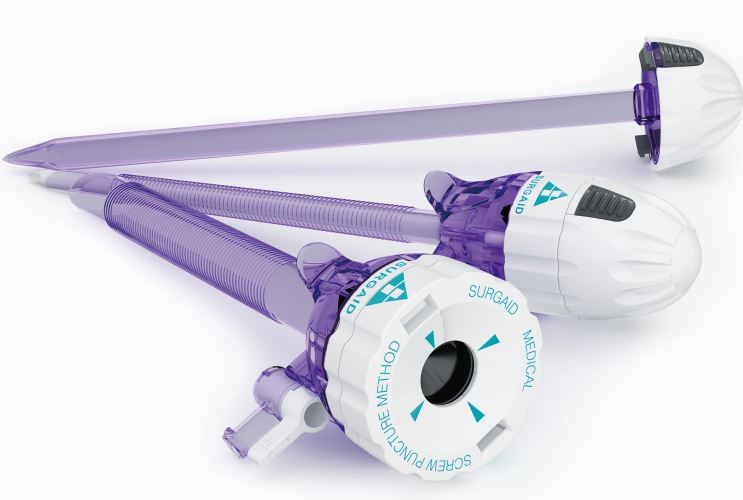
Surgaid Bladeless Bariatric Trocar
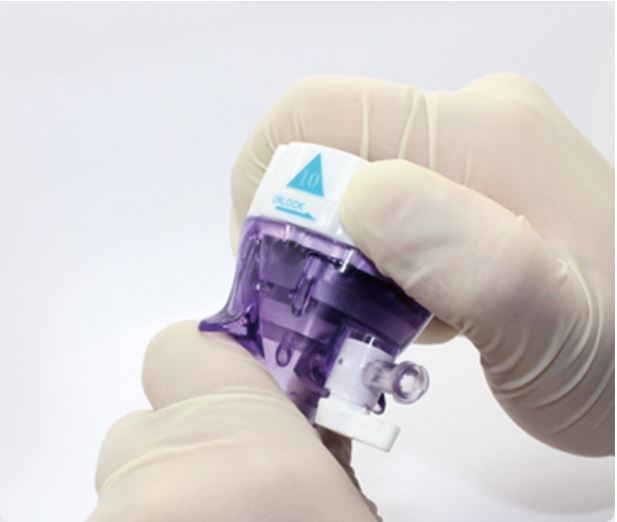 |
The Laparoscopic Optical Trocar has no knife and sharp tip design, which effectively expands and stretches the tissue, avoids damage, and protects the organs. |
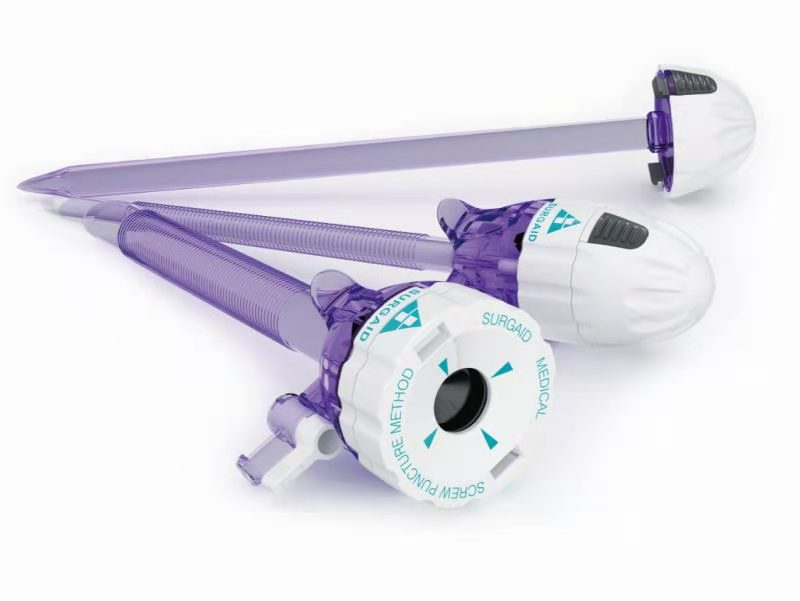 |
The non-slip thread design on the wall of the puncture cannula is designed to overcome the easy slippage of the trocar and is ergonomic, increase the adhesion and controllability of puncture, and greatly reduce the common complications of laparoscopic surgery. |
|
Detachable structure: The sealing cap adopts a double-layer sealing design to ensure the airtightness of the Endoscopic Screw Trocar Set during use. |
SPECIFICATION:
| No. | Ref No. | Description |
| 1 | NPVM-100-1-5 | Optical, 5*100mm |
| 2 | NPVM-100-1-10 | Optical, 10*100mm |
| 3 | NPVM-100-1-12 | Optical, 12*100mm |
| 4 | NPCS-100-1-5 | Bladeless, 5*100mm |
| 5 | NPCS-100-1-10 | Bladeless, 10*100mm |
| 6 | NPCS-100-1-12 | Bladeless, 12*100mm |
| 7 | NPCS-100-1-15 | Bladeless, 15*100mm |
| 8 | NPCS-150-1-5 | Bladeless, 5*150mm, For Bariatric Surgery |
| 9 | NPCS-150-1-10 | Bladeless, 10*150mm, For Bariatric Surgery |
| 10 | NPCS-150-1-12 | Bladeless, 12*150mm, For Bariatric Surgery |
| 11 | NPVM-100-2-B | Optical, Length-100mm (1 Trocar 10mm + 1 Cannula 10mm) |
| 12 | NPVM-100-3-A | Optical, Length-100mm (1 Trocar 5mm + 1 Trocar 10mm + 1 cannula 10mm) |
| 13 | NPVM-100-4-B | Optical, Length-100mm (1 Trocar 5mm + 1 Trocar 10mm + 1 Trocar 12mm + 1 Cannula 5mm) |
| 14 | NPVM-100-4-C | Optical, Length-100mm (1 Trocar 5mm + 1 Cannula 5mm + 1 Trocar 12mm + 1 cannula 12mm) |
ABOUT SURGAID PRODUCTS:
For more product information at https://www.surgaid-medical.com/