








John Hunter (1728-1793)'s research on wound healing, inflammation, and arterial ligation was 100 years after Harvey published "A Demonstration of Blood Circulation" (1628), 70 years after the discovery of capillaries in Malpiki Later, the discoveries of these great researchers made Hunter's research possible. Hunter is one of the most famous surgeons in the world. When talking about a common type of trauma, blood that sheds blood forms a scab on the wound, he said: "This natural phenomenon reduces the damage to just a superficial wound. The blood continues to flow from the crust to the deeper part of the wound, inhibiting its vitality, just like the natural part of the base of the surface wound, new skin under the scab begins to form; If the scab becomes inflamed, or the part below it loses its binding power, then inflammation will occur, and sometimes it will become purulent. Here, Hunter recognizes a fact that has only been fully realized in recent years: blood has a self-healing function; blood clots have their value and should not be disturbed; dry scabs are usually beneficial, but sometimes harmful of.
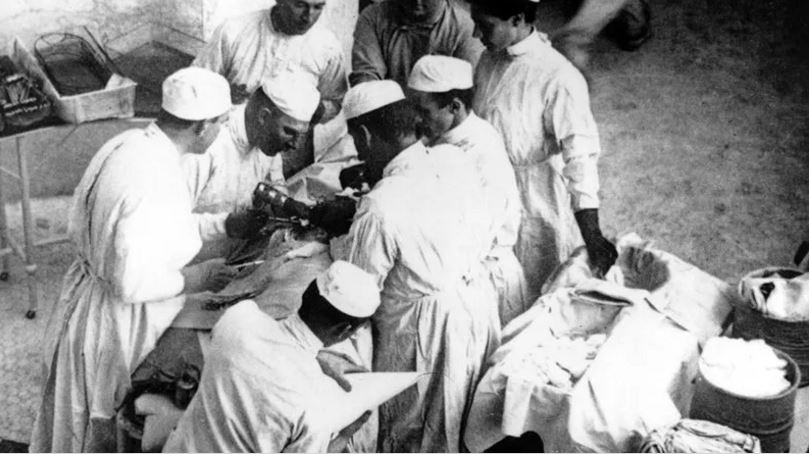
Before the Hunter era at the end of the 18th century, there is no doubt that there is a clear difference between the social status and professional status of practicing surgeons and physicians themselves. The latter possessed all the scientific knowledge at the time, and the former was just an apprentice in a barbershop. In 1690, Abraham Gehema wrote that the army commanded the best surgeons at the time. When faced with some practical problems, physicians are immersed in subtle academic changes and fruitless thoughts. However, in the writings of those old surgeons, some exciting personal observation records can often be found. Although these old surgeons may be rude and uneducated. In German universities, when the post of professor of surgery was first established, it was considered to undermine the dignity of the doctor who taught the art. Therefore, around the middle of the 18th century, Albrecht von Haller (1708-77) taught surgery in Göttingen and Berne, but never lowered his status to perform surgery. In this regard, Billroth commented: “For many years, Albrecht von Halle of Bern has been giving lectures on surgery, but he has never touched a person with a knife. It's hard to understand."
Even in Britain more than 100 years ago, the work of a surgeon still carries a clear sense of shame. It was not until 1800 that the Royal College of Surgeons obtained its license, but that was very difficult. The parliament has repeatedly refused to grant new licenses to the disbanded "surgeons group". According to reports, when the bill passed in the House of Commons, Lord Thurlow said in the House of Lords: “Surgery is as unscientific as slaughter.” Only when the Inspector’s Court, an institution that still exists, decides to report The charter was finally passed when George III appealed. During the great Hohenstaufen period, Frederick II ordered teachers to study anatomy diligently in 1231. Until now, under the enlightened intervention of kings and rulers, medicine has been helped and advanced many times.
The establishment of the School of Surgery in Paris in 1731 was considered a turning point in the history of surgery and the true starting point of the career of surgery.
The French saw the five anatomy demonstrations performed by surgeon La Peyronie a few years ago as the beginning of a new era. Von Bergmann built an anatomy theater for surgical students in Berlin in 1713, but this did not have as widespread influence as the Paris Academy. The development of clinical teaching can be traced directly back to Boerhaave, who was a professor at Leyden University in the early 18th century, with unparalleled influence and reputation. His students brought new methods to Austria, Germany, and Edinburgh, and their descendants were the founders of early medical schools in this country. Leiden University has always been the first in its influence on the development of medical teaching.
At the end of the 18th century, the relationship between surgery and general internal medicine was far less satisfactory in Germany than in Britain and France. Surgeons demonstrate surgical cases are often completed under the guidance of internal medicine teachers. When Reil was called to Berlin from Hale Halle as a professor of medicine in 1810, he naturally hoped that this customary relationship would be preserved so that Carl Ferdinand Graefe, a young student of Wilhelm v. Humboldt, could also work under his guidance. But according to the monarch's order, the independence of Graefe and surgery was established. Graefe was appointed as a military doctor. He performed well in the war and was highly regarded by the king, so the country soon established an independent surgical clinic and entrusted it to him. Due to strict national financial requirements, the first batch of equipment in this clinic is very crude. In the first nine years of its establishment, the ten-bed hospital had to find a new place five times, but in 1818, it was located on the site of what is now the surgical clinic of the University of Berlin. The outstanding contemporary Philipp Walther was very impressed with Griffith’s clinic. He visited the clinic in 1834: "The Griffith’s clinic in Berlin is an extraordinary and spectacular clinic with fearless and Works in a very talented way; Whether in France, the United Kingdom, northern Italy or the Netherlands, we cannot find such a clinic. Its characteristics are purely German. "
About Surgaid products:




For more product information at https://www.surgaid-medical.com