








A stoma in Greek refers to an opening in the abdominal wall for excretion of feces or urine.
In order to treat diseases, a part of the intestine is placed on the surface of the abdomen to excrete feces. This is the so-called "colostomy", commonly known as "artificial anus", or "fecal bag". The main function of an intestinal stoma is excretion. , Diversion and decompression.
Accord
ing to different parts of the intestinal stoma, it can be divided into colostomy and ileostomy; according to the different purposes of the intestinal stoma, it can be divided into permanent stoma and temporary stoma; according to the morphology of the intestinal stoma, It can be divided into end enterostomy and loop type enterostomy.
It is true that complications related to enterostomy are objectively present, such as: stoma bleeding, stoma ischemia, stoma necrosis, stoma infection, stoma stenosis and so on.
When performing various types of intestinal stoma surgery, every surgeon has his own experience, which is the key point to effectively reduce stoma-related complications.
1.In general, the intestinal stoma during surgery should follow the principle of "as close to the anus as possible".
2.There are five commonly used enterostomy: sigmoid single-chamber stoma, sigmoid loop double-chamber stoma, transverse colon double-chamber loop stoma, ileal single-chamber stoma, ileal loop double-chamber stoma. Note: Cecal stoma is rarely used clinically.
3.The position of the stoma: The best position of the artificial anus should be the place with the least postoperative complications and the patient's convenience in handling the stoma. Generally, it should be based on the five principles proposed by Tumbull:
① Located below the umbilicus;
②Located in the rectus abdominis;
③Located at the highest point of subcutaneous fat in the abdominal wall
④ Avoid scars, wrinkles, skin depressions and bony protrusions;
⑤The patient's eyes can see where the hands can touch.
4. A round incision is usually used for a single-chamber stoma, and a linear incision is usually used for a looped double-chamber stoma.
5. Since the diameter of a single cavity stoma is generally 2 to 2.5 cm, a circular incision with a diameter of 2.5 cm can be used for preoperative positioning (the diameter of a dollar coin is just 2.5 cm).
6. The skin incision of a single cavity stoma does not need to be too large. Its size can accommodate 2 fingers (the operator's index finger and middle finger), and its size is suitable for most patients.
7. When suturing the intestinal stoma and the various layers of the abdominal wall, pay attention to the proper tension. Too tight may affect the blood circulation of the intestinal loop of the stoma (complicated by avascular necrosis of the stoma) and cause poor defecation; too loose can cause postoperative stoma prolapse.
8. For temporary intestinal stoma surgery, it is recommended to use non-absorbable silk thread during the operation. Purpose: When performing intestinal stoma recuperation, the non-absorbable black silk thread can mark the level and boundary of the operation.
9. When protruding the intestinal tube out of the abdominal wall, the thickness of the patient's subcutaneous fat should be fully estimated. For patients with thick subcutaneous fat, the intestinal tube from the abdominal wall should be longer. For patients with thin subcutaneous fat, the intestinal tube from the abdominal wall should be appropriate Shorter.
10. When single-lumen or double-lumen stoma is performed for obstructive intestinal tract, the redundancy of local shrinkage of the intestinal tract after the edema is eliminated should be fully considered. To prevent the intestinal wall edema from disappearing, "mucosal skin separation" occurs between the intestinal wall and the abdominal wall incision.
10. When single-lumen or double-lumen stoma is performed for obstructive intestinal tract, the redundancy of local shrinkage of the intestinal tract after the edema is eliminated should be fully considered. To prevent the intestinal wall edema from disappearing, "mucosal skin separation" occurs between the intestinal wall and the abdominal wall incision.
11. When designing a looped enterostomy (also known as "double-lumen enterostomy"), it is proposed that the two intestinal lumens outside the abdominal wall should be sutured intermittently to narrow the gap between the two intestinal lumens. Natural clearance to reduce the chance of hernia next to the stoma after surgery.
12. In an intestinal stoma operation, the levels of suture are "peritoneum + posterior rectus sheath", "anterior rectus sheath", and "skin". When suturing the intestinal tube and the skin of the abdominal wall, in order to facilitate postoperative care, it is recommended to suture the ostomy intestine tube.
13. When suturing the mesentery and abdominal wall layers (note: especially when suturing the mesentery and the abdominal wall layers), because of the abundant blood supply in the mesangial area, it is necessary to prevent bleeding or hematoma at the mesangial suture. Possible.
14. The reasonable heights of the stoma protruding outside the abdominal wall are:
(1)The ileostomy protrudes from the abdominal wall about 1.5 to 2.5 cm, with a diameter of about 2 to 2.5 cm;
(2)The colostomy protrudes about 1 to 1.5 cm from the abdominal wall, with a diameter of about 3 to 5 cm.
15. Change the "bad habit" of differential suture between temporary stoma and permanent stoma-some patients who have a temporary stoma may eventually become a temporary stoma due to various reasons, such as an anastomotic leakage. Permanent stoma.
If the temporary stoma is not sutured in place, for example, the stitches of the suture are too far apart, it will increase the probability of parastoma hernia after the operation.
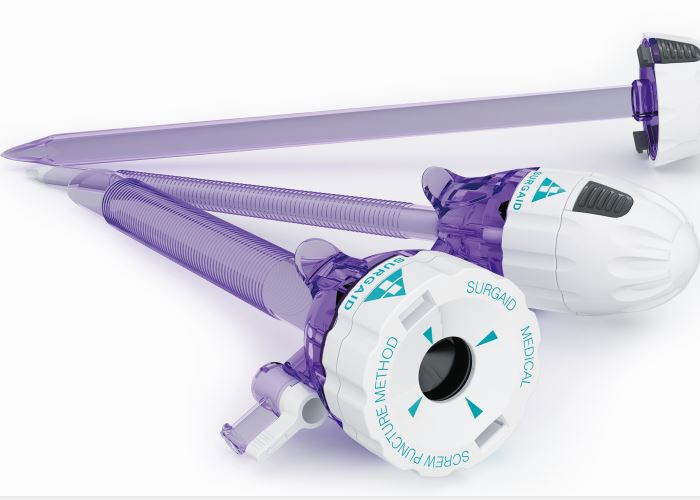
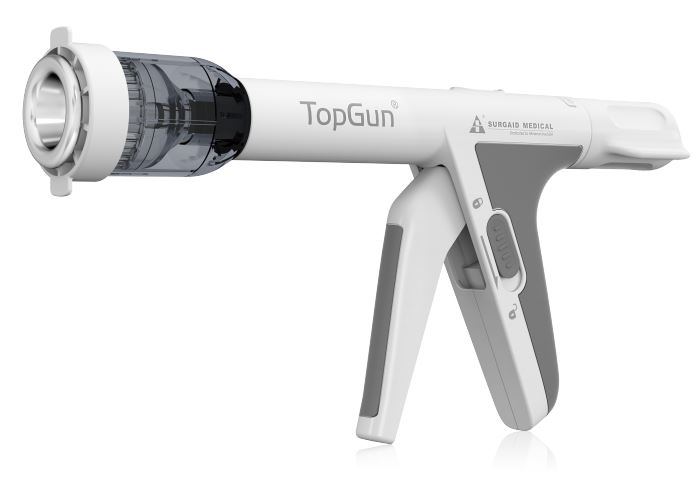
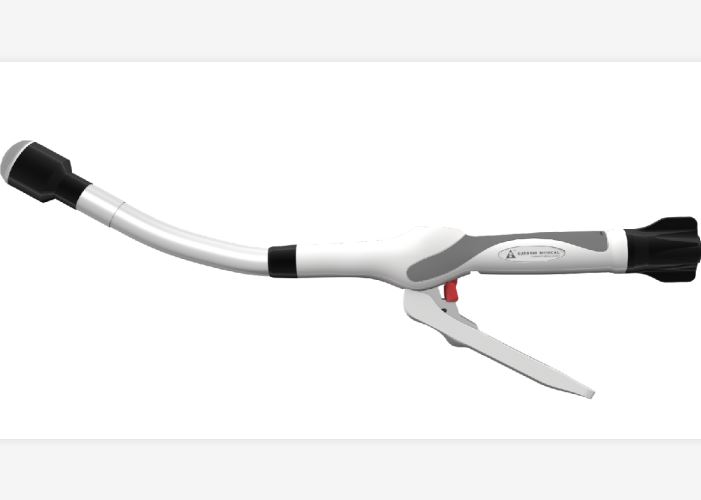
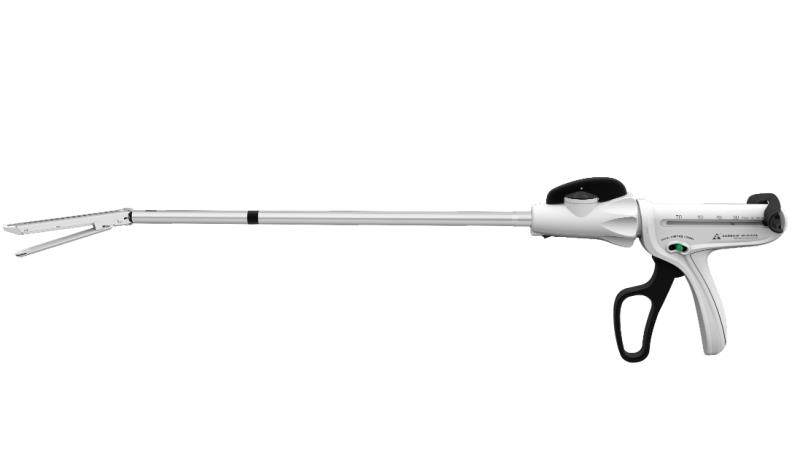
ABOUT SURGAID PRODUCTS:
For more product information at https://www.surgaid-medical.com/