







1.Intermittent vertical mattress valgus suture
It is a tension suture. Generally, the needle is inserted 0.5-1.0 cm away from the incisal edge, passing through the skin and subcutaneous tissue across the incision to the opposite side and exiting at a symmetrical point 0.5 cm away from the incisal edge. Then insert the needle at a distance of 0.1 to 0.2 cm from the incisal edge on the side of the needle, and pass through the skin at a distance of 0.1 to 0.2 cm from the incisal edge on the opposite side. The plane connected by the 4 needle in and out points should be perpendicular to the incision. The margin is turned out.
| Be applicable | Suture loose skin such as armpits, groin and scrotum |
| Advantages | It has strong tensile strength and has little effect on the blood supply of the wound edge. |
| Disadvantages | Stitching is time-consuming and expensive |
2.Simple interrupted suture
One of the most used stitching methods, the operation is simple and easy to learn, and the application range is wide.
| Be applicable | The suture of skin, subcutaneous tissue, muscle, fascia, peritoneum and other tissues is especially suitable for suture of wounds with high risk of infection. |
| Advantages | The operation is simple and fast; when suturing, the tension of the suture can be adjusted according to the condition of the wound edge, which has little effect on the blood circulation of the wound edge; individual suture breaks after the operation will not affect other sutures; the suture can be flexibly removed when the wound is infected drainage. |
| Disadvantages | The suture time is longer and the suture is more expensive; there may be misalignment of the tissue. |
3.Simple continuous suture
Each stitch is the same as simple interrupted suture, but only the same suture is used from start to finish. For the first stitch before the end, pull the heavy thread tail out and leave it on the opposite side to form a double thread and the heavy thread tail knot. When suturing, an assistant is required to help tighten the suture.
| Be applicable | Long wounds with elasticity without too much tension, such as sutures of subcutaneous tissue, fascia, blood vessels, and gastrointestinal tract. |
| Advantages | The stitching is tight and fast. |
| Disadvantages | One break, the entire wound will collapse. |
4.Continuous seaming
Also known as blanket stitching, before stitching the next loop, the suture is required to pass back through and wrap around the exposed part of the previous loop to form a "seam" effect.
| Be applicable | Straight-line incision of the skin and suture on thin and more active parts. |
| Advantages | It can ensure that each loop of the suture is more independent and complete, the suture is more neat and tight, and the hemostatic effect is better. |
| Disadvantages | It is time-consuming. |
About Surgaid products:
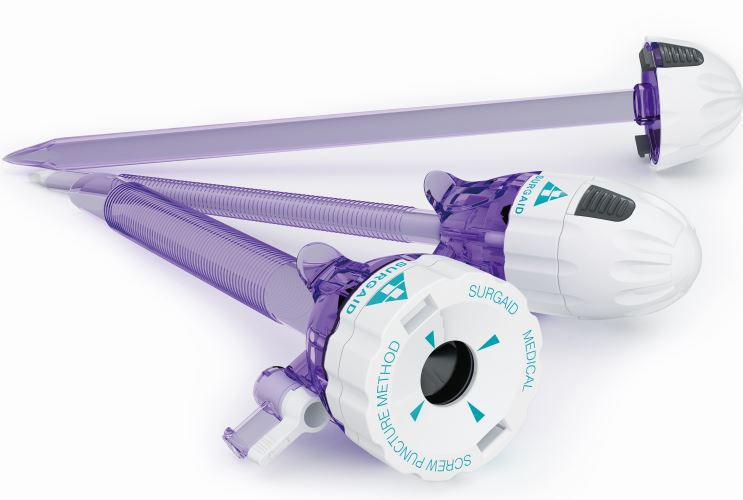
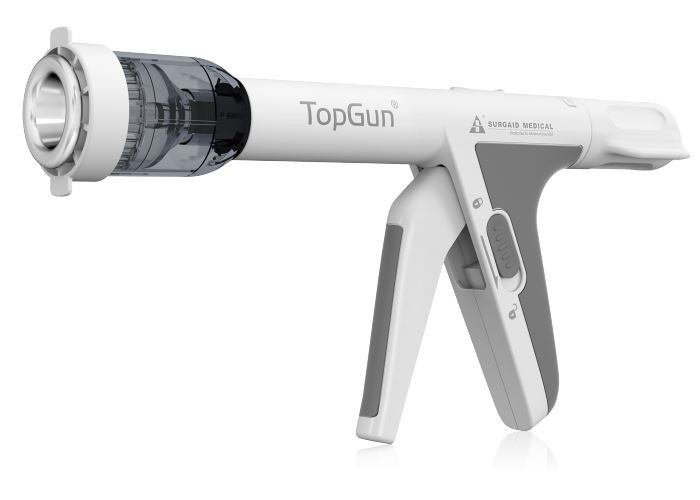
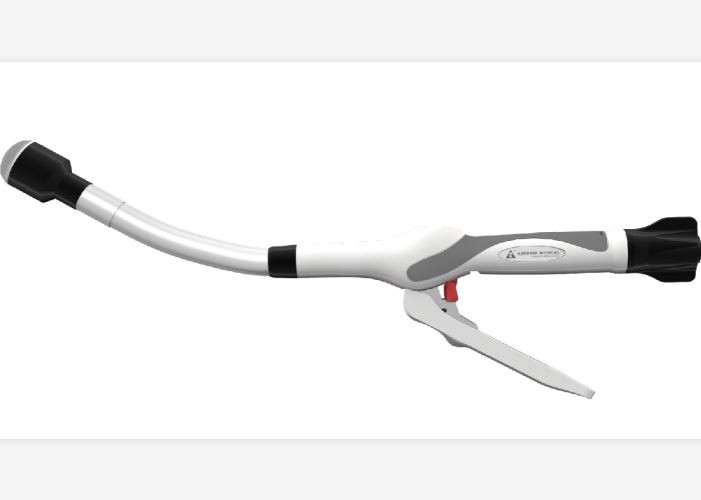
For more product information at https://www.surgaid-medical.com/