








The Square Knot
The square knot in the body is similar to the "device knotting" in open surgery. The length of the cord is about 8-15 cm. Too long or too short a cord will make it difficult to wire the instrument. The stitches and threads are put into the body through a multi-caliber one-time stamp card, or a reversible stamp card after being folded. After sewing through the tissue, it is best to keep the thread tail short and place it near the knot where it is easy to grasp.
There are several ways to wire the instrument. First wrap the wire around the instrument twice, similar to a traditional surgical knot. Winding the thread twice when you tie the first half knot helps to lock the knot. Regardless of whether it is wound once or twice, then use a winding device to grasp the short tail and pull it through the coil.
Grasping the end of the thread as close as possible to the end will help to drag the thread through the loop. Then tie the second half knot with a long thread tail winding device, but this time you have to wind the thread in the opposite direction to make a square knot. As before, the winding instrument grabs the short tail and pulls it through the coil. Successive knots should also be wound in alternate directions to ensure a square knot.
The difficulty of laparoscopic winding is often due to the angle at which the instrument enters the abdominal cavity. Grasping the end of the curved needle perpendicular to the axis of the needle holder can improve the angle and facilitate winding. Adding a poke card or replacing the lens with a poke card may also help. Angled lens and 3D video laparoscopy technology can improve the field of view and sense of direction. Keep in mind that changing the length of the thread, the use of curved auxiliary grasping devices, and the proper planning of the poking position are all conducive to the knotting of internal devices.
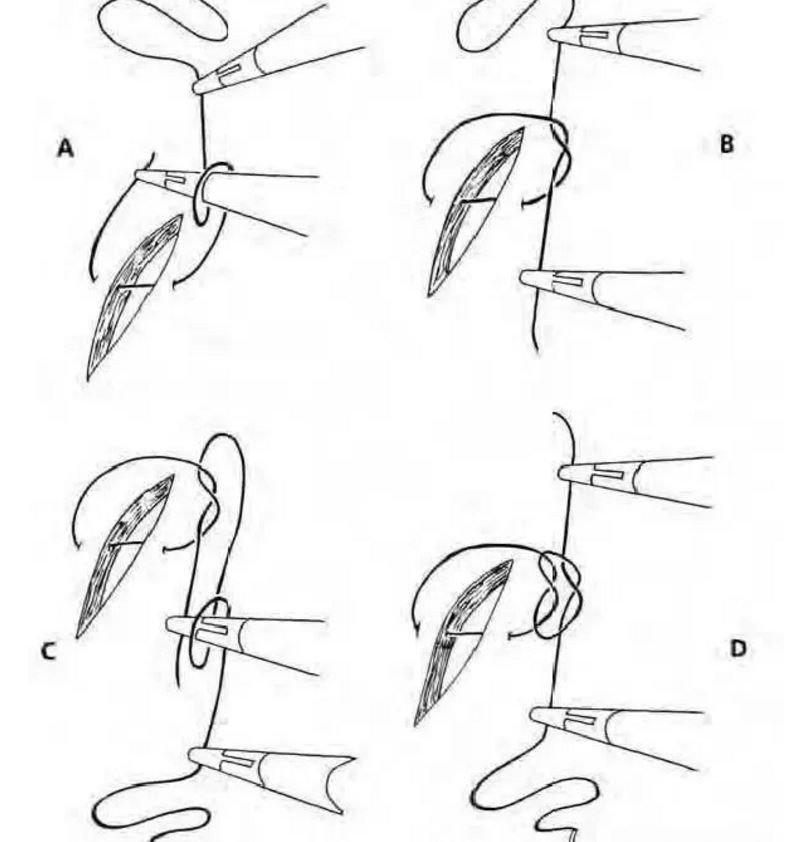
Knotted in the body (A: wrap around the first circle; B: wrap around the first half knot; C: wrap around the second knot in the opposite direction; D: square knot)
Another winding method is the triple-twist knot. The needle holder grasps the end of the needle, and then rotates the needle holder 360 degrees four times to wind the thread on its shaft. Loosen the needle and let it hang down. Then the needle holder grasps the end of the thread and passes it through the loop. Then pull the two thread tails as usual and tie them into a surgical knot. Tie a few more knots to make sure the knot is firm.
But sometimes this method is difficult to operate under the card at a specific angle. In this case, the thread can be placed on the surface of the adjacent tissue to make a coil. Then use grasping forceps to pick up the suture intersection, otherwise the loop will remain on the surface of the tissue. The second grasping pliers passes through the coil and grasps the short end to complete the knot. Use the same method for the second half knot, but in the opposite direction. This technique is easier to complete under a three-dimensional laparoscope with a sense of depth.
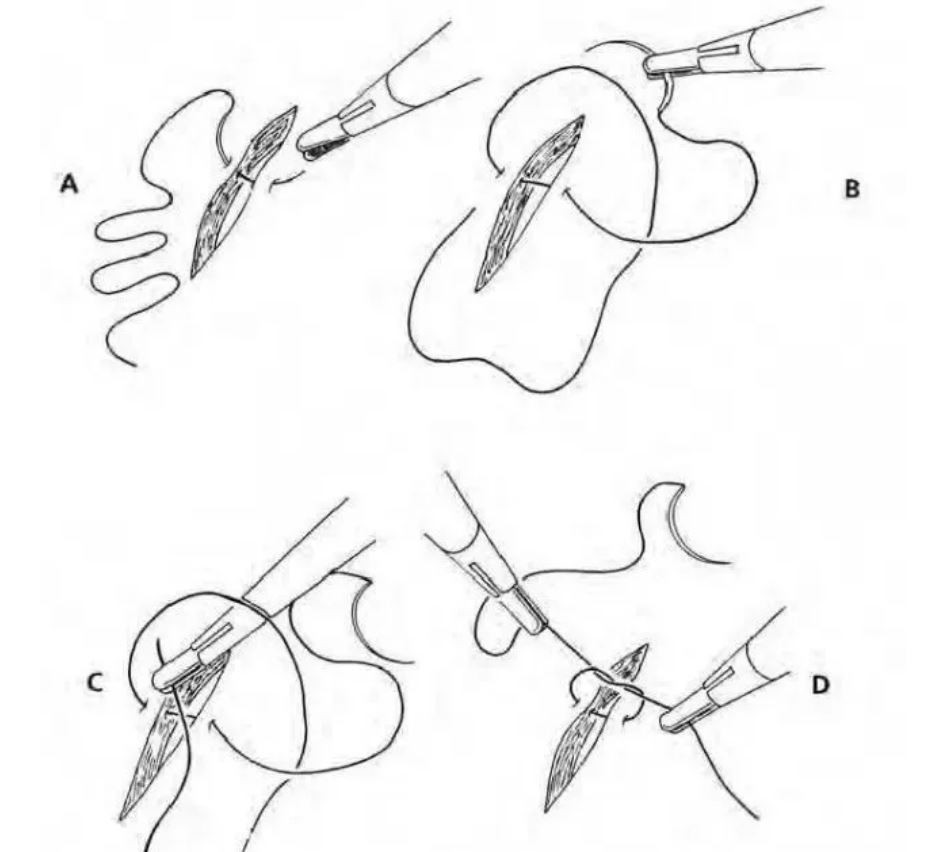
Jones inserts the knot (A: suture on the surface of the tissue; B: cross stitches; C: insert the instrument through the loop to grasp the end of the thread; D: tighten the first half knot, and then use the same method to tie the subsequent half knots and cross stitches The direction of the lines should be alternately opposite).
About Surgaid Medical products:
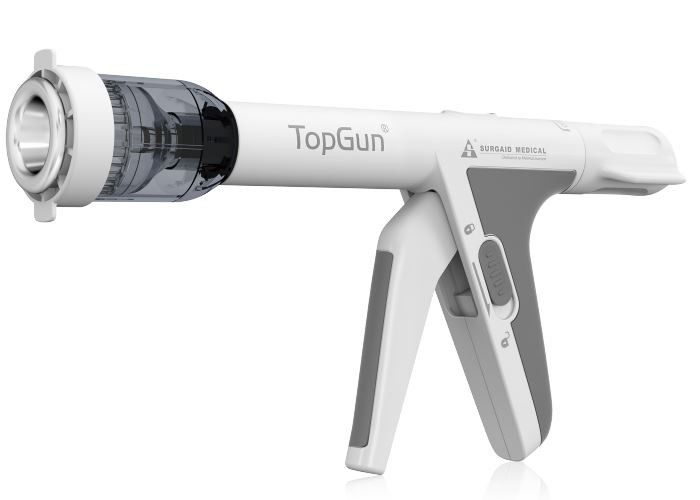
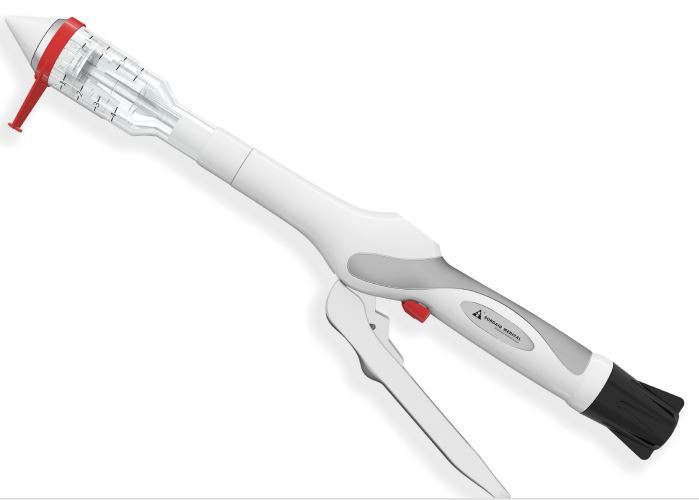
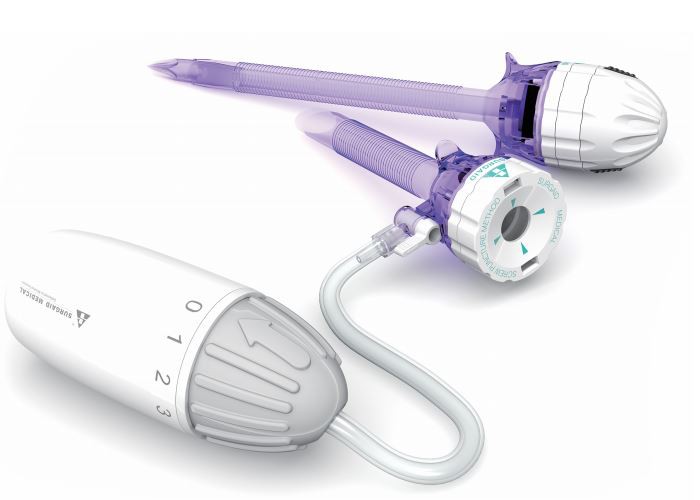
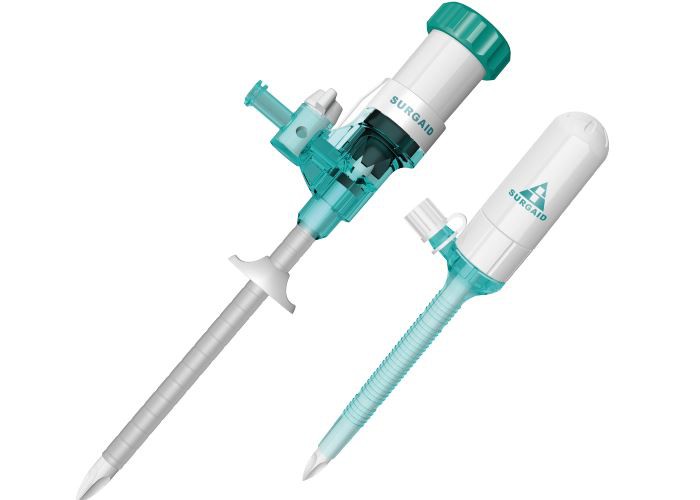
For more product information at https://www.surgaid-medical.com/