








The skills required to tie a square knot in open surgery are completely different from laparoscopic suturing and knotting. The laparoscopic instruments are longer, the range of movement is limited, and the tactile feedback is weakened.Moreover, the enlarged field of view requires the surgeon to adjust the moving speed and improve the moving efficiency in proportion to complete the operation task within a reasonable time. This further increases the difficulty of the operation by the surgeon, and the difficulty of laparoscopic surgery is affected by several factors.
Today we will discuss the impact of the poking hole position.
Stitching VS. Knotting
The purpose of suturing and knotting is to repair (repair + recovery), including the repair of secondary injuries (such as intestinal damage, vascular damage), reconstruction (ie recovery) of blood vessels or digestive tract, and reinforcement (such as suture reinforcement after mechanical anastomosis).
Compared with knotting, the former contains "design" and "technical" factors, such as stitch length, margin, and stitch depth, while the latter is basically a "monotonous" operation. Sutures are sometimes difficult, such as repairing damaged blood vessel walls and anastomosing difficult parts. Sutures sometimes do not need to be knotted: such as barbed threads. Obviously, stitching is more important and more difficult.
Poke hole position
Ideally, the longitudinal axis of the needle holder should be parallel to the incision to be closed by suture. The end of the needle holder should be easy to reach the surgical field, and the length of the instrument in the abdominal cavity should be only half of its total length (15 cm). The auxiliary grasper can be moved comfortably from the opposite side to the incision. The angle between the two instruments and the lens should be 60-90 degrees (Figure 1). There should also be at least three poke holes. The field of view is the most "natural" when the lens is located behind the grasper and the needle holder.
This ideal position is sometimes impractical, so another acceptable position is for the lens to observe the surgical field from one side of the two instruments. Do not place the lens on the opposite side of the two instruments to observe the surgical field at any time, because the picture obtained at this time is reversed (mirror) and is not conducive to precise operation of the instruments. In addition, if the poking hole is too close (<7 cm), it will cause the equipment to fight with each other and block the view of the lens.
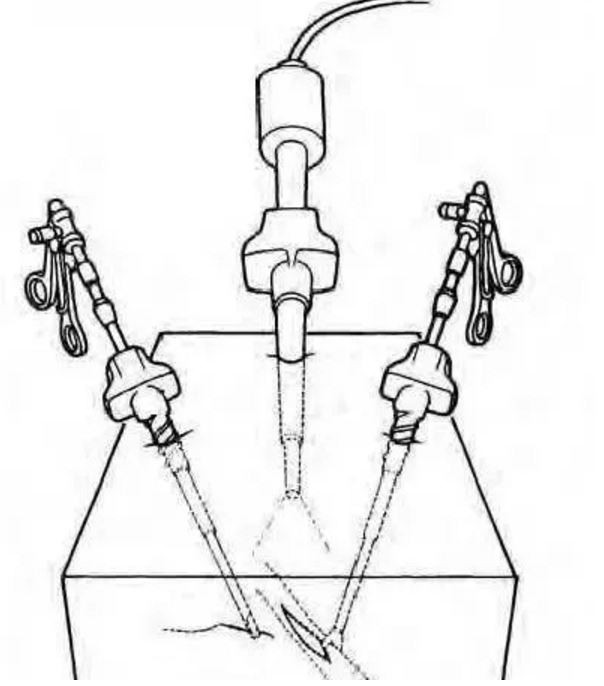
Poke the correct position of the hole during laparoscopic suture. The lens is behind, between the two suture instruments, the latter two enter the surgical field at an oblique angle.
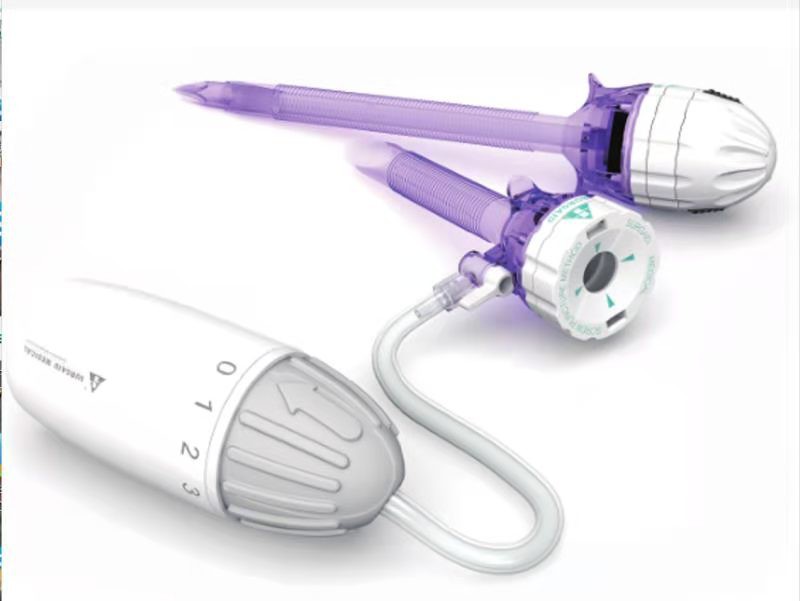
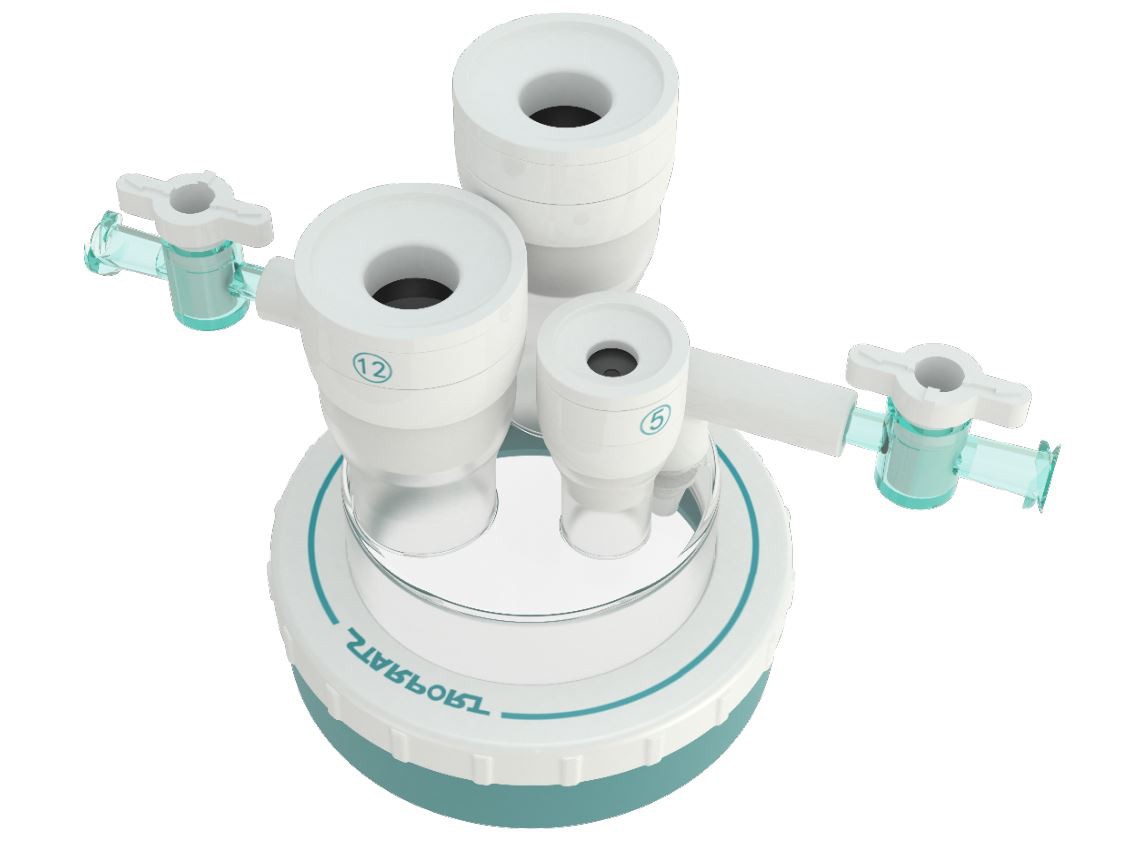
The ideal poke card for laparoscopic sutures should allow both thick instruments (10 or 12 mm in diameter) and thin instruments (5 cm in diameter) to pass through the same interface, and it should be tough enough to withstand multiple stitches in and out Without damaging the sealing ring and causing air leakage. There are many disposable stamp cards on the market that have the above characteristics. When using a non-disposable poke card, the needle should be folded back into the abdominal cavity through the interface.
Both hands need to come in handy when stitching. Threads, airbags or suture methods can all fix the poke card to prevent the surgeon from accidentally pulling out the poke card when pulling out the intra-abdominal instrument during the suture process. A well-trained first assistant should be able to pass the tissue to the needle tip at the correct angle at all times, making the suture operation easier.
The use of non-damaging instruments helps prevent accidental tissue damage. If the surgeon is struggling to reach a certain angle, it is best to add another poke hole. When a large number of suture operations are expected to be used during the operation, it is particularly important to design the poking hole carefully at the beginning.
About Surgaid products:
For more product information at https://www.surgaid-medical.com/