







Paying attention to the finishing work of laparoscopic surgery can help reduce postoperative complications of laparoscopic surgery. These finishing tasks include: full exploration again, emptying the abdominal cavity and subcutaneous gas and suture the puncture incision.
1.Full exploration
The purpose of re-exploration includes checking whether the surgical wound is bleeding, whether important organs are damaged, whether there is gauze left in the pelvic and abdominal cavity, and so on.
When observing whether the surgical wound is bleeding or not, many professional literature recommends lowering the intra-abdominal air pressure before observation, because high abdominal pressure may close the capillaries and have hemostatic effect. Lowering abdominal pressure can find new bleeding points and help to stop bleeding completely.
Intraoperative bleeding is often in small arteries or capillaries, and the blood pressure at these locations is almost greater than the conventional pneumoperitoneum pressure. In other words, the conventional pneumoperitoneum pressure cannot achieve the effect of closing blood vessels, and it may be unnecessary to reduce the pneumoperitoneum pressure for observation.
When observing whether important organs are damaged, some small experiments may be used if necessary. For example, rectal inflation experiment: A 50ml syringe is directly pumped into the rectum through the anus, and water is injected into the pelvic cavity at the same time. Observe whether there is air bubbles and determine whether there is colorectal perforation. Bladder filling test: Melanie diluent was injected into the bladder through a urine tube to observe whether the bladder was damaged.
2.Emptying the abdominal cavity and subcutaneous gas
Pain in the abdomen and shoulders after laparoscopic surgery is related to carbon dioxide retention. The mechanism of pain is the involved pain caused by stimulation of the diaphragm or phrenic nerve. Emptying the abdominal cavity at the end of the operation can reduce the corresponding pain. Pay attention to the exhaust process slowly, and do not press down on the abdominal wall to accelerate the exhaust, so as to prevent the intestine or omentum from being brought into the puncture hole by the airflow to form a hernia.
Easily overlooked is the emptying of subcutaneous gas. Postoperative pain or ecchymosis in the perineum or lower abdominal wall of the patient is often related to the accumulation of gas under the skin around the puncture port. This is more likely to occur in patients with thin body or sagging skin. After the skin of the puncture port is sutured, the subcutaneous air cannot be discharged, and it will enter the weak vulva or perineum, causing subcutaneous emphysema and even subcutaneous blood. This will not bring serious consequences, but there are ways to avoid it. Before suturing the incision, massage the skin in one direction toward the incision. Repeatedly several times, the subcutaneous air will be discharged through the incision edge of the skin. If there is air accumulation under the skin, the fingers will feel twisted and air bubbles will emerge from the edge of the incision.
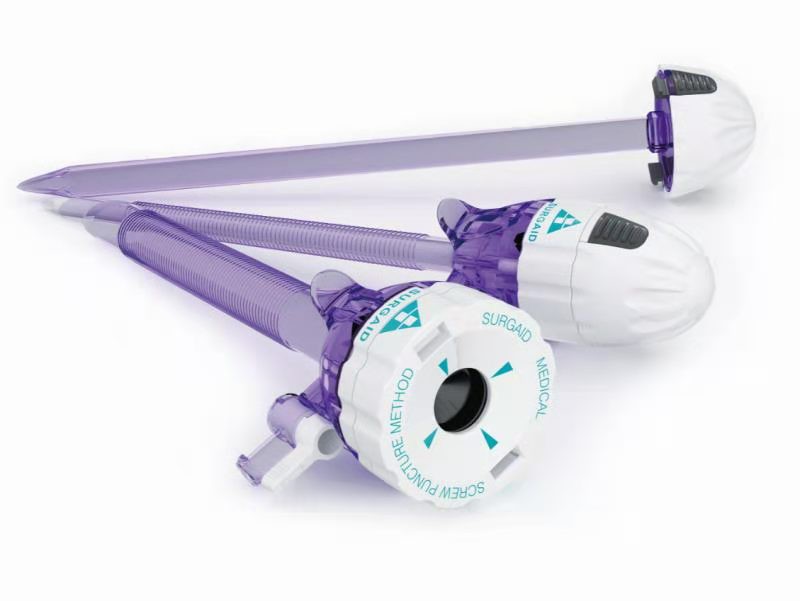
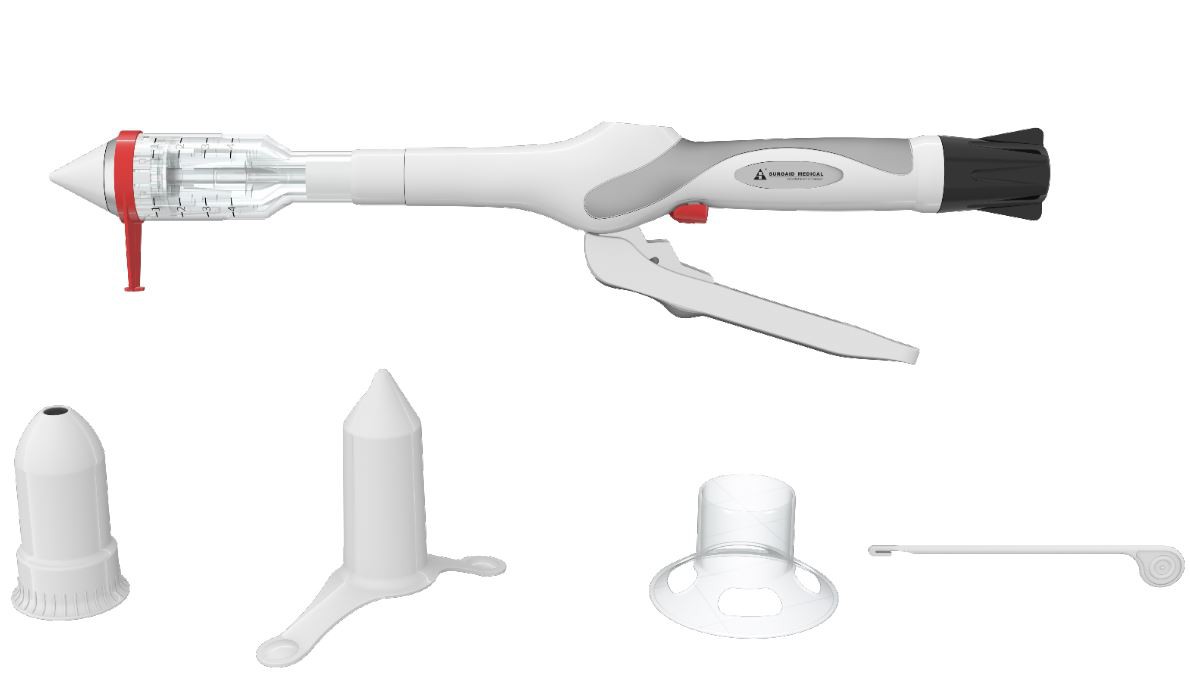
3.Suture the puncture incision
The problems faced by this step may be bleeding from the incision, poor healing, and even puncture hernia.
The incidence of puncture hernia is very low, but the consequences are serious. A large sample survey of laparoscopic surgeons showed that the incidence of puncture hernia was 0.21%.
About Surgaid products: