








1 HASSON
The open technique or Hasson puncture to enter the abdominal cavity under direct vision has matured. This technique can be performed in any quadrant of the abdomen, but it is usually performed in the central periumbilical position.
The process of opening the abdominal wall structure by Hasson puncture is clearly visible, avoiding the risk of damaging the internal organs of the abdominal cavity, because the separation of each layer at will can deal with local bleeding in time, so it is also the best treatment for bleeding among all the burring methods method.
2 OPERATION
Make a 10-12 mm long longitudinal or horizontal or curved skin incision at the lower or upper edge of the umbilicus. The choice of incision position can be based on the preference of the surgeon or consider the adhesion situation at the previous incision. Use a narrow retractor or Kelly hemostatic forceps to bluntly separate the subcutaneous fat and tissue. After seeing the white line of the abdomen, use the hemostatic forceps to clamp both sides of it and lift it up to make a 10 mm vertical incision. Use a hemostatic forceps to continue the separation. A thick white peritoneum can be seen. Use a pair of hemostatic forceps to grasp both sides of the peritoneum and lift it up. Carefully open the peritoneum with a scalpel. A black and empty abdominal cavity is visible. Place one on each side of the incision. Traction line, used to draw the peritoneum and abdominal white line and then to fix the Hasson sheath.
Next, you need to confirm whether you have successfully entered the abdominal cavity. The surgeon inserts his little finger into the incision. With this action, it can be verified whether the opening is enough to insert the sheath, and the local condition can be touched. Usually the peritoneum in this area is free, but occasionally there may be some thin omental adhesions, which can be pushed away by hand. Insert a Hasson sheath with a blunt core into the abdominal cavity, screw the spiral sleeve into the fascia to prevent air leakage, and then fix the pre-set sutures on both sides to the grooves on both sides of the sleeve. Then pull out the inner core, connect the gas injection tube, turn on the switch, set the gas flow rate and maximum pressure (15 mmHg, elderly patients should be appropriately reduced). When the abdominal wall bulges, observe the pressure in the abdominal cavity and the total amount of gas injected.
If there are greater omental adhesions and thick falciform ligament, the lens may not go smoothly through the end of the Hasson sheath into the abdominal cavity. If the surgeon used his little finger to touch the area and found no abnormalities, he can usually find the correct way after rotating and adjusting the lens angle. If the entrance cannot be found, the casing should be pulled out and re-inspected before inserting it. In rare cases, due to dense adhesion, if a feasible approach cannot be found by finger exploration, the insertion position of the Hasson sheath should be changed.
Surgaid Medical (Xiamen) Co., Ltd
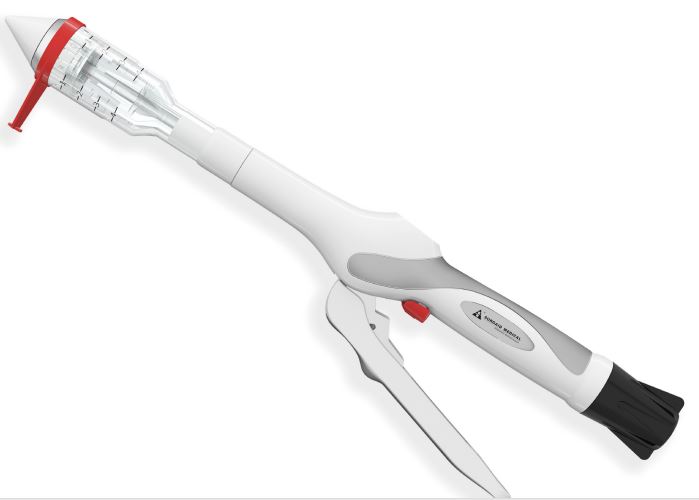
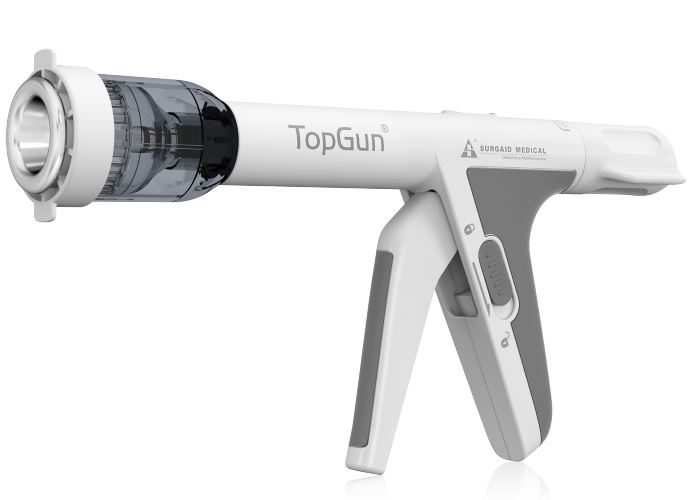
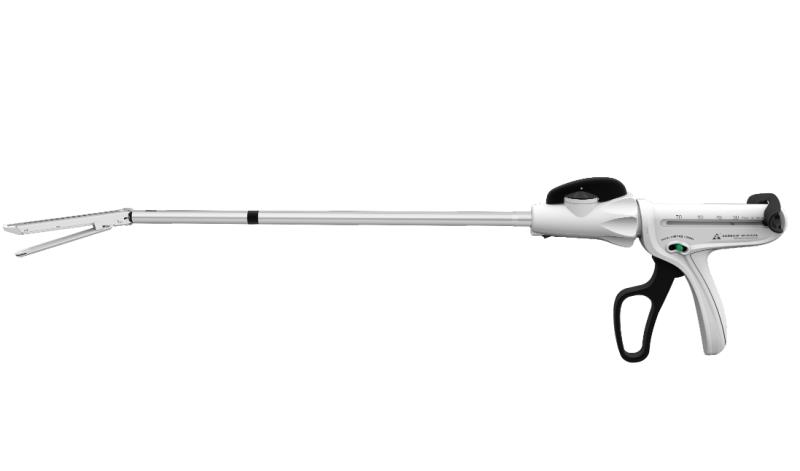
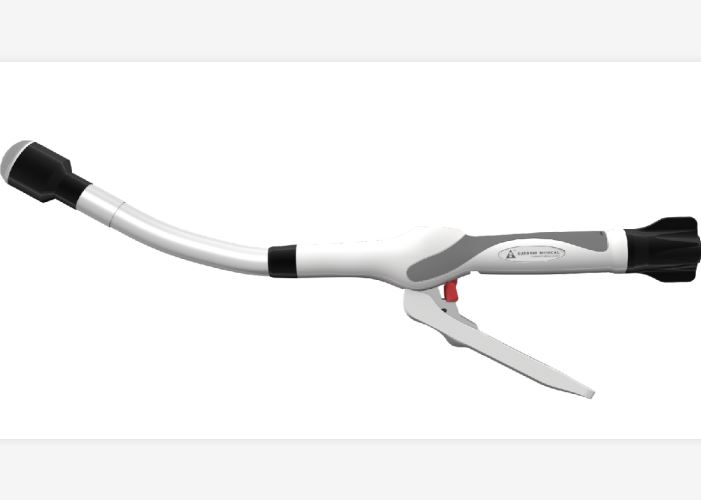
Surgaid Medical (Xiamen) Co., Ltd has been committed to surgical product development ,production and marketing for 10 more years . In particular, minimally invasive surgical products. Minimally invasive surgery is a surgical direction of development. Such as Disposable Laparoscopic Trocar, Linear Cutter Stapler, Circular Stapler, PPH, and so on.
Manufacturing our own Surgical products allows us to have complete control over the design and evolution of our products. We are able to adapt quickly to the constantly evolving healthcare market and offer high quality, single-use, cost-effective solutions that directly compete with global market-leaders.
Surgaid products:
For more product information at https://www.surgaid-medical.com/