







Everyone knows that surgeons wear either blue or green surgical gowns. Why don't they wear white coats like the doctors in the outpatient department?

In fact, not only the surgeons' operating gowns are blue-green, but in some hospitals, even the walls of the surgical operating rooms are painted blue or green. Do doctors prefer cool colors?

You know, surgeons choose this cool color is not accidental.
At the beginning of the 20th century (before 1914 to be precise), surgeons' surgical gowns were indeed white, because white was a symbol of cleanliness. But then it all turned blue or green all at once.
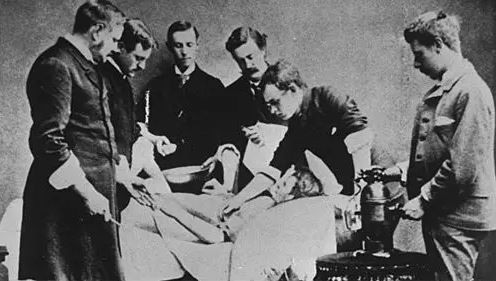
In the mid-nineteenth century, surgeons in London wore ordinary coats, but at that time they had redesigned the buttons on the sleeves of the coats so that they could roll up their sleeves for surgery without taking off their coats.
In fact, the main reason why blue and green surgical gowns are adopted by surgeons is that these two colors are complementary colors of human internal organs and blood.
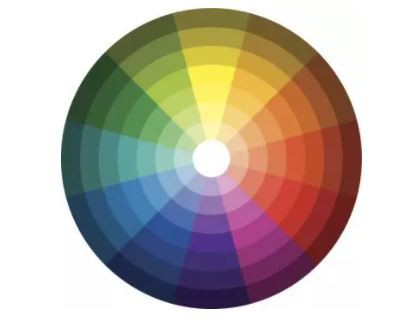
Complementary colors are mainly a theory put forward in the 19th century. What appears together with complementary colors is the color circle, a chromatic tool.
So what if the surgical gown and the walls are turned white?
White not only causes glare, but also makes people prone to an optical illusion called afterimage.

Stare at this banner for 20 seconds, and then stare at the white below. What will you see?
Because surgeons must race against time and concentrate their attention when performing operations, they will keep their eyes on the red human internal organs. If they look at their colleagues in white clothes at this time, or glance at a white wall, they will often see the complementary color of red-blue-green "ghosts". Imagine you see a green intestine on your colleague’s white coat…
These blue-green afterimages will affect the surgeon's vision and judgment, which is very dangerous for the patient.