







Compared with open surgery, minimally invasive laparoscopic radical resection of colon cancer has the advantages of reducing perioperative blood loss, pain, abdominal wall complications and hospital stay, and is favored by surgeons and patients.
At present, most randomized controlled trials compare the effects of open surgery and laparoscopic surgery for early colon cancer, and the risk of peritoneal metastasis after surgery for early colon cancer is extremely low. However, for the two surgical treatments for locally advanced colon cancer There are fewer studies on the risk of peritoneal metastasis after surgery.
A recent randomized controlled study by the Japanese Clinical Oncology Research Group showed that in patients with colon cancer whose pathological stage is T4, the peritoneal metastasis rate of the laparoscopic surgery group seems to be higher than that of the open surgery group, and it is also used in animal model experiments. Prove that laparoscopic surgery may increase the risk of peritoneal metastasis.
Therefore, in order to determine whether laparoscopic surgery for locally advanced colon cancer (T4) increases the risk of postoperative peritoneal metastasis, Professor Hiroshi of the Department of Oncology, University of Tokyo, Japan conducted a single-center retrospective study, the results of which were recently published in Surgery.
1.Research method
The investigators included 272 colon cancer patients with stage T4a who underwent laparotomy or laparoscopic surgery at Tokyo University Hospital from 1997 to 2017. All patients had no distant metastasis or peritoneal metastasis. Among them, open surgery There were 146 cases and 126 cases were laparoscopic surgery.
The scope of surgery for the two groups of patients was performed in accordance with the guidelines of the Japanese Colorectal Cancer Society.
After colon cancer resection, continuous monitoring was performed for 5 years, including tumor markers every three months, chest and abdomen and pelvic CT scans every six months, and colonoscopy once a year.
Based on CT results, the peritoneal nodule index was used to assess the risk of peritoneal metastasis.
The 5-year survival rate, tumor recurrence and metastasis-free survival rate, postoperative metastasis location and peritoneal metastasis rate were recorded for the two groups of patients; the clinicopathological characteristics of colon cancer and the operation method were analyzed whether the risk factors for postoperative peritoneal metastasis.
2.Research result
The 5-year survival rate (83.2% VS 77.8%) and recurrence-free survival rate (59.3% VS 57.1) of the laparoscopic surgery group and the open surgery group were not statistically significant.
The peritoneal nodule index in the laparoscopic surgery group and the open surgery group had no significant significance.
The rate of peritoneal metastasis in the open surgery group was 15.4%, while that of the laparoscopic surgery group was 28.1%, which was significantly higher than that in the open surgery group.
Peritoneal metastasis was the most common site of metastasis in the laparoscopic surgery group (29 of 46 cases were peritoneal metastases), while in the open surgery tissue, among 40 patients with metastases, 20 were liver metastases and 14 were peritoneal metastases.
Analysis shows that the degree of tumor differentiation, histological type, lymphatic invasion, N stage, number of lymph node metastases, carcinoembryonic antigen>5 ng/mL, and type of surgery (laparoscopic or laparoscopic) have a significant impact on the incidence of peritoneal metastasis.
3.Analysis conclusion
The results of this study showed that patients with colon cancer whose pathological stage was T4a underwent laparoscopic surgery to have a higher risk of postoperative peritoneal metastasis than patients undergoing open surgery, and laparoscopy was an independent risk factor for peritoneal metastasis.
The results of this study show that laparoscopic surgery is not perfect. Clinicians should objectively consider whether the patient is the best treatment plan based on the patient's personal situation, and promptly prevent and find the best treatment plan for early detection of peritoneal metastases.
This study is a single-center retrospective analysis with a large time span and limited by medical technology at the time. At present, large-scale multi-center randomized controlled trials are still needed for further research.
In my country, laparoscopic technology is popular with clinicians and patients because of its minimally invasive advantages. This study shows that laparoscopic technology has its shortcomings while being minimally invasive. For clinical doctors, this may be a question worth pondering.
About Surgaid products:
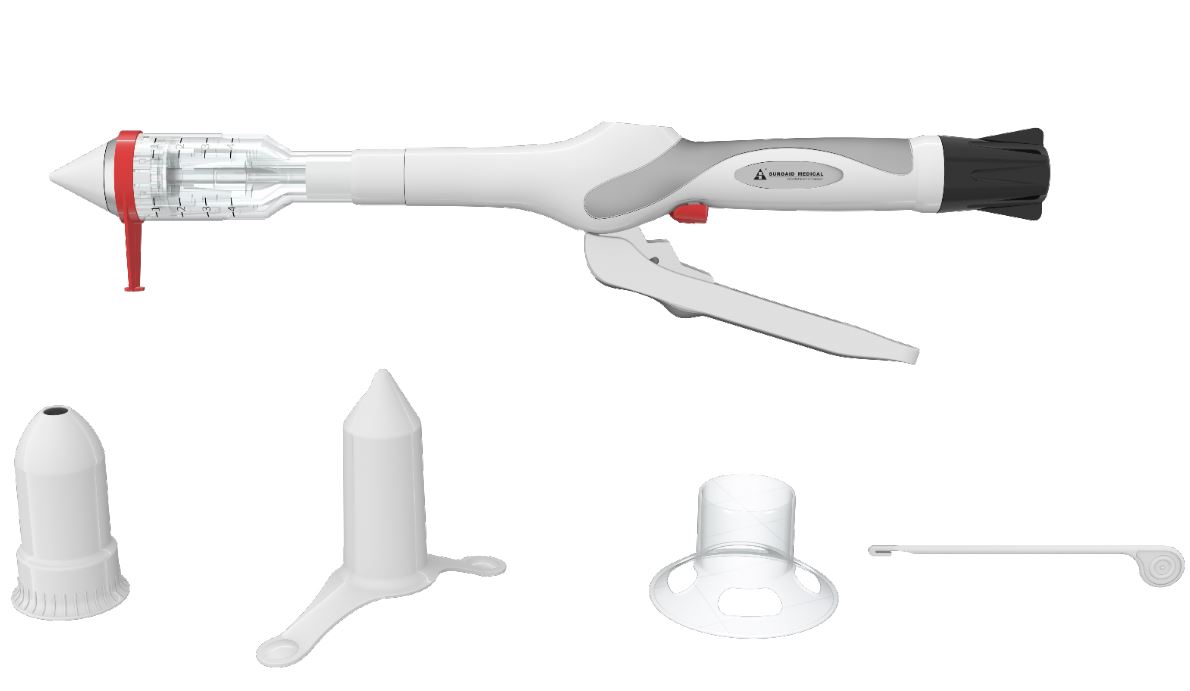
For more product information at https://www.surgaid-medical.com/