







How much do you know about surgical smoke?
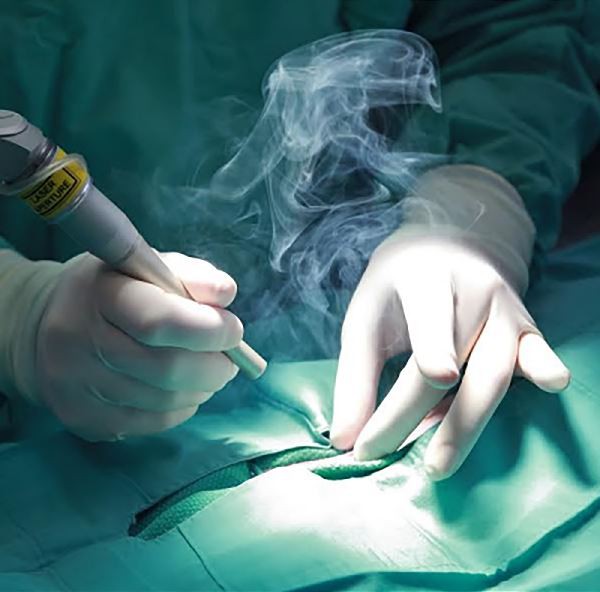
With the widespread use of electrosurgical equipment, lasers and other power tools in modern operating rooms, more and more smoke is generated when these high-temperature equipment touch tissues. Smoke contains many harmful chemical components, active viruses, active cells, inactive particles and so on. Operating room staff are exposed to harmful fumes for a long time, and their health is greatly threatened.
Short-term sources of smoke
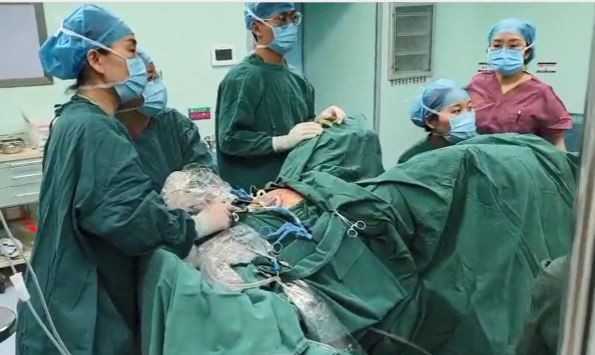
1- The operating room is renovated and newly built, and a large amount of decoration materials emit toxic gases
2- After surgical expansion or renovation, due to heavy medical tasks, most of them rushed into the new operating room without completely removing the odor. In addition, the operating room itself is complicated to be decorated, requiring the installation of multiple equipment and using a variety of decoration materials, resulting in toxic Gas accumulation.
Long-term source of smoke
1. Smoke seen for a long time-caused by surgical electrical equipment
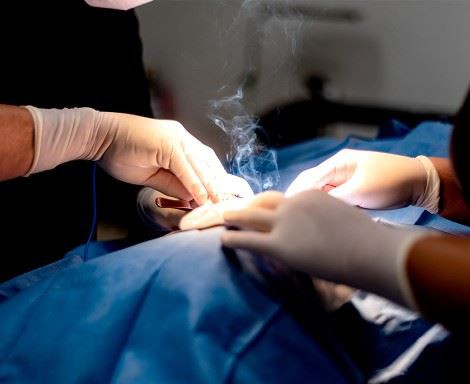
The operating room uses ESU, laser knife, high frequency electric knife or ultrasonic scalpel to produce visible smoke. Among them, the electrosurgical knife is the most prominent. The smoke concentration can reach more than 3×10⁸/m3, and 95% are aerosols with a particle size of less than 5μm. ) Can cause smog containing blood-borne pathogens in the air.
2. Long-term invisible smoke-anesthesia waste gas pollution
When inhalation anesthesia is used during the operation, due to the aging of the pipeline, the poor sealing of the mask, and the lack of anesthetic waste gas recovery and treatment facilities, a lot of anesthetic waste gas is also collected in the invisible air.
What are the hazards of operating room smoke?
1. Contains a variety of toxic ingredients
Foreign studies have shown that there are more than 600 chemical components in surgical smoke. Among them, the highest content of chemical components are hydrocarbons, nitriles, fatty acids, phenols, etc., of which CO and acrylonitrile are the most concerned. Other chemical ingredients that have less content but are also of concern because they are highly toxic substances include hydrogen cyanide, formaldehyde and benzene.
① If the concentration of COHb exceeds the maximum concentration (2%) that the human body can withstand, symptoms such as headache, dizziness, nausea, and arrhythmia will occur. If it is also accompanied by coronary artery disease, the symptoms will be more severe.
②Acrylonitrile is a colorless volatile liquid, which is easily absorbed by the skin and lungs, and can cause harm to the human body by releasing cyanide.
③Hydrogen cyanide is a colorless toxic gas, which is easily absorbed by the lungs, gastrointestinal tract and skin.
④ 95% of the smoke produced by surgical electrosurgical equipment is aerosols with a particle size of less than 5μm. The distribution of aerosol particles in the human respiratory organs is related to their particle size, and larger particles are deposited in the larger respiratory tract. Particles with a particle size of 1-5 μm can directly invade the alveoli.
A large number of studies have shown that long-term excessive inhalation of the above gas can cause headache, dizziness, tearing, nausea, cough, bronchitis, asthma and potential long-term effects.
2. Is a potential source of viral infection
A large number of studies have found that lasers, ESUs and ultrasonic knives can vaporize complete tissue cells and blood components. Studies have confirmed that these vaporized cells are still active. The lower the energy used by the instrument and the shorter the time each time it is used, the greater the probability that there are active cells in the surgical smoke.
Foreign studies have found that certain electric surgical tools can vaporize HIV-containing blood, and the smoke produced contains active HIV, which can infect cultured human T cells. HIV DNA can remain active in the smoke generated by CO2 laser for 14 days. The activity completely disappeared after 28 days. There have been reports that skin or eye contact with smoke may cause HIV infection.
How to protect the operating room from smoke
1. Choose appropriate personal protective measures
Personal protective measures include the correct wearing of high-filtering surgical masks, eye protection glasses, gloves, and isolation gowns. General surgical masks can only block 5μm or larger air particles and cannot provide adequate smoke filtering protection. Specially designed masks (respirators) still cannot effectively block surgical smoke. High-performance filter masks, if worn correctly, can provide greater protection. This filter mask must conform to the shape of the face, fasten the face, and have no gaps around the nose and mouth. The mask you wear should also be changed frequently.
2. The operating room needs to be equipped with complete ventilation equipment
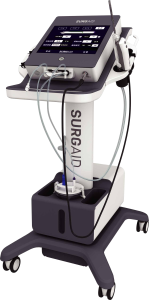
The smoke exhaust system includes a central smoke exhaust system and a mobile smoke exhaust system. To control and prevent infection. All filters used in the smoke exhaust system must be treated in strict accordance with the standards of biohazards.
The mobile fume extraction system can be placed 2 to 3 cm away from the high-frequency electric blade that produces smoke; if it is placed too far, only a small part of the smoke will be evacuated.
An efficient smoke evacuation system should have 3 basic conditions:
①The smoke evacuation equipment will not interfere with the surgeon's surgical activities.
②There is enough negative pressure to ensure smoke removal.
③It can effectively filter smoke and make the environment safer.